BirdNote®: A Bird in the Hand
Air Date: October 18, 2024
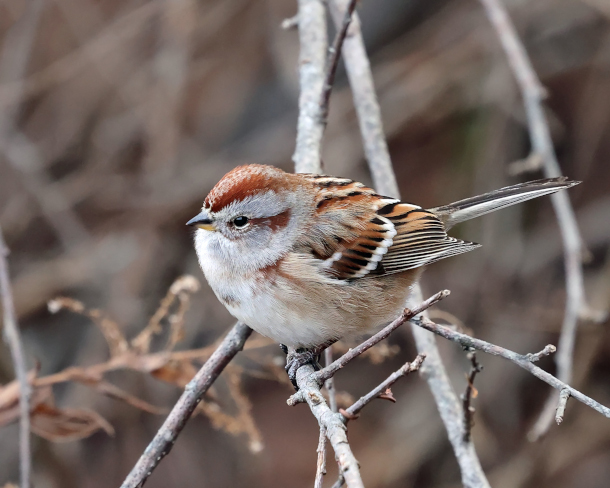
Pennsylvania is known for its unusual town names, which include Burnt Cabins, Intercourse, Pillow, Chinchilla, Hazard and Panic. In today’s BirdNote®, Michael Stein shares how one small community came to be called “Bird-in-Hand”, Pennsylvania.

- 1BirdNote®: A Bird in the Hand
Transcript
O’NEILL: Pennsylvania is famous for its unusual town names, which include Burnt Cabins, Intercourse, Pillow, Chinchilla, Hazard and Panic. And there’s a story for how each got its name. In today’s BirdNote, Michael Stein shares how one small community came to be called “Bird-in-Hand”, Pennsylvania.
BirdNote®
A Bird in the Hand
Written by Bob Sundstrom
ambient of Eastern bird songs in the background throughout
STEIN: You’ve probably heard the old saying: “A bird in the hand is worth two in the bush.” Well, it’s a very old saying, and it’s gone through some changes over the years.
The phrase first pops up in a seventh-century Aramaic proverb, "Better is a sparrow held tight in the hand than a thousand birds flying about in the air."
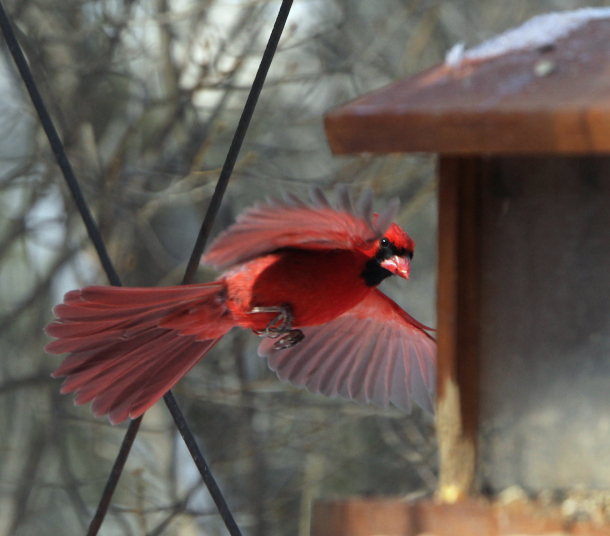
An English book from the 15th century had this version:
It is more certain a bird in your fist than to have three in the sky above.
One hundred years later, there was another old English saying: “Better one byrde in hande than ten in the wood.”
In each era, the pragmatic wisdom is clear: Hold on to the sure thing rather than taking a gamble on something better.
The old saying eventually made it to Pennsylvania, where there’s a town named “Bird-in-Hand.” Legend has it that when two road surveyors in the early 1700s were trying to decide whether to stay the night where they were working or head back to Lancaster, one cited the bird-in-hand proverb. They decided to stay, and the place was named “Bird-in-Hand.”
I’m Michael Stein.
###
Producer: John Kessler
Executive Producer: Sallie Bodie
Editor: Ashley Ahearn
Associate Producer: Ellen Blackstone
Assistant Producer: Mark Bramhill
Bird sounds provided by The Macaulay Library of Natural Sounds at the Cornell Lab of Ornithology, Ithaca, New York. 110222 recorded by ML W Hershberger WV May
BirdNote’s theme was composed and played by Nancy Rumbel and John Kessler.
© 2019 BirdNote December 2019
ID# language-09-2019-12-16 language-09 Narrator: Michael Stein
https://www.birdnote.org/podcasts/birdnote-daily/bird-hand
O’NEILL: For pictures and more, flap on over to the Living on Earth website, loe.org.