US Ducks World Climate Meetings
Air Date: March 07, 2025
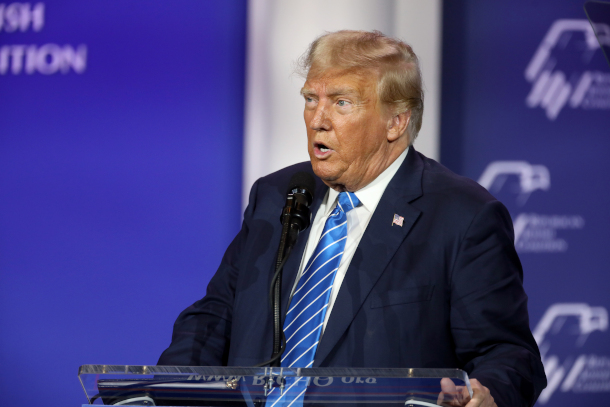
The Trump Administration barred government scientists from attending a key UN climate science meeting in February 2025. What’s more, it seems the customary US task force including officials from the State, Energy, Commerce and Transportation departments has not attended any meetings for the underlying UN climate treaty since the beginning of the Trump Administration. Ben Stockton of the Center for Climate Reporting joins Host Steve Curwood to discuss what this could mean for global climate diplomacy.
- 1US Ducks World Climate Meetings
Transcript
CURWOOD: In February the IPCC or Intergovernmental Panel on Climate Change gathered to finalize the outlines for its seventh assessment report, which is expected to be published by late 2029. Periodically, the IPCC provides crucial scientific information on the course of the climate crisis, options for slowing the planet’s warming, and the impacts society needs to prepare for. But this year, one group was notably absent from the IPCC sessions. Climate scientists employed by the US government were forbidden to attend by the Trump Administration. What’s more, it seems the customary US task force including officials from the State, Energy, Commerce and Transportation departments has not attended any meetings for the climate treaty, the UNFCCC, since the beginning of the Trump administration. Ben Stockton is an investigative reporter with the Center for Climate Reporting and collaborated with the Guardian for this story. Welcome back to Living on Earth, Ben!
STOCKTON: Hi, Steve, thanks for having me back.
CURWOOD: Ben, what do you see as the implications of barring top US government scientists from attending meetings like those of the Intergovernmental Panel on Climate Change and the technical groups associated with the UNFCCC?
STOCKTON: We're seeing kind of the second Trump term kind of operate quite differently from the first one, and it being escalated in many ways. I think what was interesting from my own reporting was the types of meetings that they've missed in the last few weeks, at the meetings that US officials continued to attend through Trump's first term, even though he was very clear during his first term that he was also going to leave Paris. And I think what experts are concerned about is how this is going to kind of play out in the long term. Even if you are opposed to climate action, there is a foreign policy reason to be attending these meetings. And so, it really kind of feels like this is an ideological opposition to attending these meetings that has possibly taken an even deeper route since Trump's first term. We saw, for example, Secretary of State Marco Rubio saying that he wasn't going to be attending the G20 summit because it was too focused on DEI and climate change, and that was anti American. And so, it really does feel like an escalation and a shifting in the policy.
CURWOOD: Ben, while the US has pulled out of the Paris Climate Agreement, yet again, we are still signatories of the treaty, the original treaty, the UN Framework Convention on Climate Change. So, what do you think are the consequences of not showing up to meetings for a treaty that we are bound by?
STOCKTON: I was speaking to some experts about this, who said, no one's required to attend these meetings. You are attending for your own benefit. This is your time to have your influence in these groups. It's a forum. And I think this would also apply to the IPCC meetings. And so, the consequences, really, for the US are reputational in terms of its reliability as a partner on climate change issues. A lot of the experts that I was speaking to were saying it does not make sense with Trump's foreign policy goals to not be attending these meetings. It leaves the door open for other countries to really step into that gap, China, petro states. The UAE was saying last year that it is a more reliable partner on these issues. So Trump not attending, or US officials not attending under the Trump administration is really kind of shooting the US in its foot, really, regardless of whether it doesn't support climate action or doesn't agree with the science, this is an opportunity for you to express that in those meetings, and by not attending the US is essentially voiceless, and really just losing influence on the international stage.
CURWOOD: To what extent is there even a group now at the State Department that pays attention to what's going on at the climate treaty?
STOCKTON: Yes, exactly. So, there's obviously been a lot of upheaval within the federal government over the last month or so, and of course, the State Department is not unaffected by that, and I think there's a lot of uncertainty from observers about what the fate will be of the climate change office within the State Department. And a number of the people who should have been attending these UNFCCC meetings are officials within that office, and it's really not clear from the outside whether those people are still even employed by the State Department. And you know, these are not kind of general meetings. These are pretty kind of technical meetings. Might be about helping kind of low-income countries access climate finance. It might be about developing standards on carbon markets. These are meetings that require a certain level of expertise, and I think that's what's a real big loss for these meetings, is losing that US expertise on these issues and having that voice in these forums. There is obviously a chance that the reason why US officials haven't been attending this meeting is really just a symptom of the chaos. And I did speak to one US government official who is hopeful that when things start to calm down, the layoffs stop, and there's a certain level of equilibrium reached within the government, that officials may begin to start attending these meetings again. And so, I think a lot of experts and onlookers are really looking towards events like Bonn and COP to really see what the kind of wider US policy is going to be in terms of engaging in these forums.
CURWOOD: So, the United States is technically, I guess, the second biggest emitter of hydrocarbons these days, but we are a huge producer of them. To what extent is the United States' position as a huge fossil fuel producer and emitter affecting the reputation of the United States in these fora?
STOCKTON: Yes, there's no doubt that countries would hope that the US could be more ambitious on its climate goals. I think what is interesting about the US in the kind of position that it has played, particularly over the previous administration in these forums, is that it really was able to kind of be a consensus builder. And that's, I think, really how people saw John Kerry, who was obviously working as the climate envoy under Biden, he was this kind of figure who could really get everyone to the table and find that position between the groups with the most ambitious climate plans and maybe some of the bigger oil and gas producing nations, because the US had that kind of dual role in many ways, in its own country. And so, I think that is another kind of big loss for people working in this space, is having that country that could kind of be looked to, to build that consensus with authority, with the kind of economic and political sway that a country like the US has.
CURWOOD: Ben, at the start of the Trump term and his pull out from Paris, Michael Bloomberg said that he would pay the 25 ish million dollars a year that the US pays to support the UNFCCC. What influence, if any, has that pledge, and I gather they probably have started paying it already, what has that had on the process and the image of the US?
STOCKTON: I think the finance aspect of this is just one part of it, you know? I think that there's no doubt that there will be concerns, and I've definitely heard, particularly from smaller, poorer nations, there are some concerns going forward about financing and things like that. And so obviously it's important to see that shortfall being made up elsewhere. But like I say, the influence of the US in these forums goes beyond just finance. It's more a reputational and a kind of consensus building loss, and again, with the kind of expertise that may be lost from these meetings. You know, Bloomberg can likely easily make up that shortfall in funding, but can they provide the level of insight and expertise that the US government has provided in the past? I think that's a question that remains to be seen.
CURWOOD: Ben, by the way, we're in the middle of a climate emergency. How do the officials and scientists that you've talked to, and I'm sure off the record, I'm not sure it's safe for them to speak publicly, how do they feel about our government's actions in the face of this climate emergency?
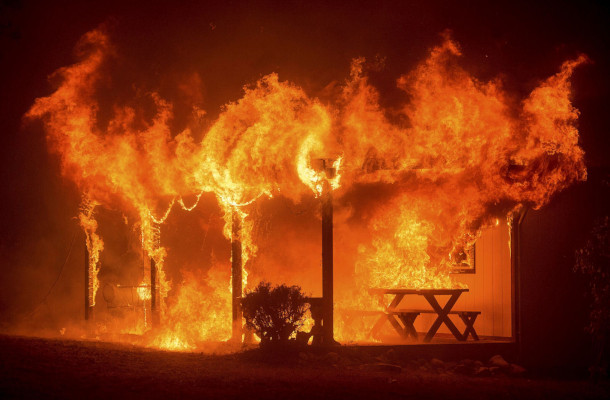
STOCKTON: I think many are concerned that Trump seems very, very committed to kind of burying his head in the sand on this issue, regardless of, of the US's policy, climate change is not going anywhere as much as they would like to, you know, remove it from government documents, remove it from contracts. This is a kind of crisis that is here and getting worse. And I think there's a real concern that even before the US left the Paris Agreement, there was a kind of broad consensus that the target of limiting global warming to 1.5 was dead. One expert said to me, like that is a near certainty now that the US has taken this stance. They said that there's no doubt that emissions will increase, and the kind of global peak demand of oil is now pushed further into the future. So, there are very legitimate consequences for these policy decisions. This isn't just ideology; this isn't just semantics. This is actually going to have a real-world impact on people, and the administration is essentially removing the country's preparedness to be able to deal with some of these crises. And you know, when the next hurricane hits the South or the next wildfires hit California, I do think that there's a very good chance that these policies will lead to those being more severe, our preparedness being worse, and that can ultimately greatly affect people, not just in the US, but it will affect people all around the world.
CURWOOD: Ben Stockton is an investigative reporter with The Center for Climate Reporting and a collaborator with The Guardian. Thank you so much for taking the time with us today.
STOCKTON: Thanks, Steve.