The Many Layers of Dia de los Muertos Altars
Air Date: October 31, 2025
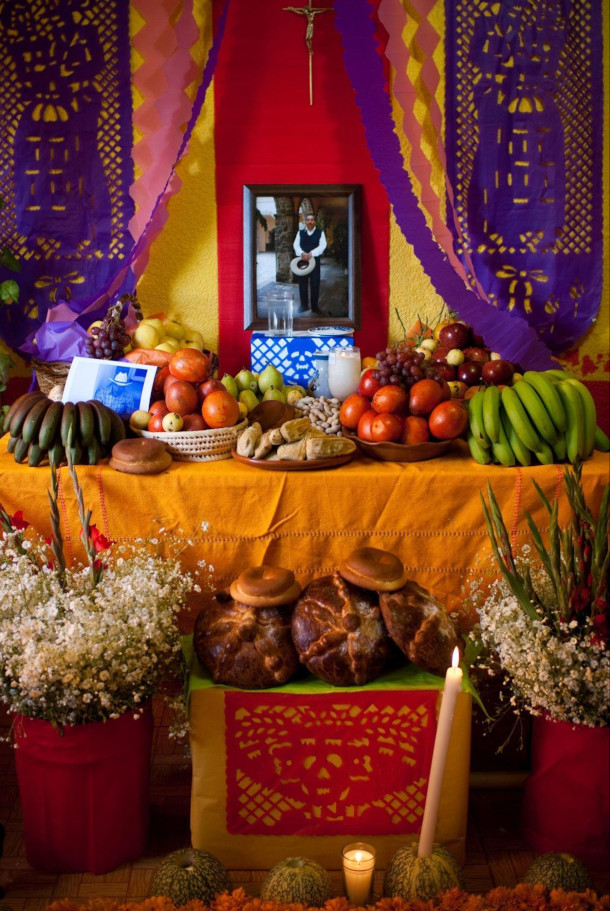
At the start of November, on the Day of the Dead or Dia de los Muertos, families in Mexico and beyond gather around altars to celebrate and invite back the spirits of loved ones who have passed away. Living on Earth Producer Paloma Beltran explains the symbolic meaning of altar materials and how this yearly tradition took on a new dimension for her this year.
- 1The Many Layers of Dia de los Muertos Altars
Transcript
DOERING: Halloween comes a day before the Day of the Dead, or Dia de Los Muertos, widely celebrated in Mexico. It’s a yearly tradition for Living on Earth Producer Paloma Beltran, and from her perch in Mexico City she tells us how the celebration has taken on new meaning.
BELTRAN: As October turns to November, thousands of candles are lighting up across the world, welcoming back the souls of family and loved ones who’ve passed away.
The Day of the Dead, or Dia de los Muertos in Spanish, is a holiday celebrated throughout Mexico and other parts of the Americas.
The idea is that by setting up a colorful altar we will attract and welcome the spirits of the departed back home.
I know it may seem like an exceptional kind of reunion but a lot of people across the world celebrate the departed in one way or another.
I should clarify that I’m no expert on Dia de los Muertos and the specifics on what to incorporate vary across regions and family traditions.
You know, that’s just how culture works.
But I would like to share a bit of what I learned throughout this year’s planning process.
Traditional altars are colorful, maximalist, and full of life!
There are a few options: 2 levels representing heaven and earth, 3 levels representing heaven, purgatory and earth, or the more elaborate 7 levels portraying different steps to heaven.
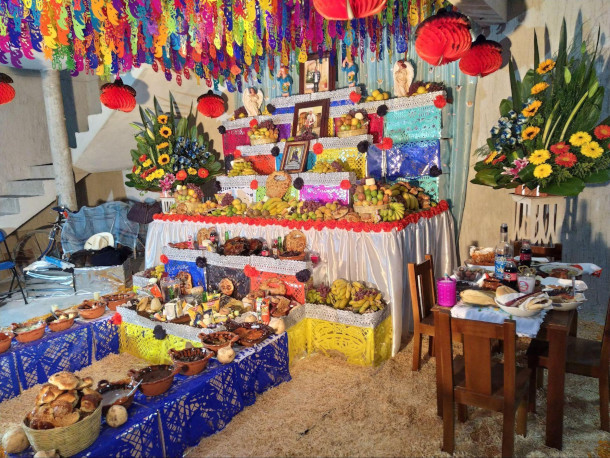
Some historians link altars to the 9 stages needed to reach Mictlan, the underworld of Mexica mythology.
Day of the Dead altars or altares can be dedicated to multiple family members, friends, mentors — basically anyone who’s passed away and that you’d like to honor.
There’s even a day of the dead dedicated to pets on October 27!
When building the altar you can go the eco-friendly route like I did and reuse cardboard boxes to set up the structure. It really doesn’t have to be expensive!
Altares represent a connection to the circle of life as well as the four elements of nature:
water, wind, fire and earth.
A glass of water signifies purity.
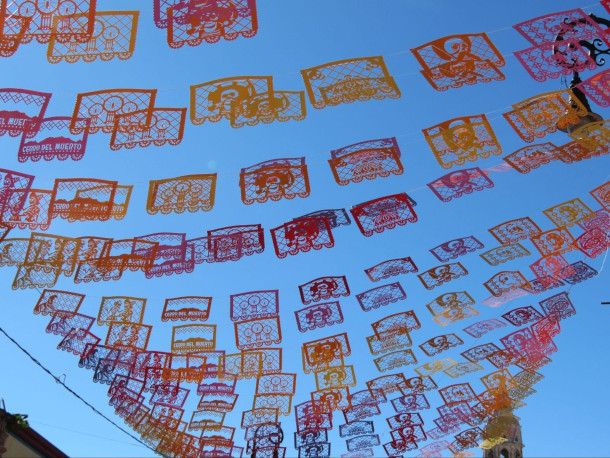
The light and delicate texture of papel picado or perforated paper represents wind and the fragility of life.
Some say the holes in the tissue paper allow souls to travel and visit us.
Fire is invoked by lit candles, which serve to light the path and guide the spirits of the deceased home.
For Earth, we offer seeds, fruits and the dead’s favorite foods as well as beverages. If your loved one enjoyed fresh lemonade for example or a cold beer make sure to place it on their altar, because who wouldn’t want to be received with a cool drink after a long journey!
And there’s one extra special element called Copal.
It’s an aromatic incense used to purify the environment and also guide the spirits to the altar. This resin comes from a tree endemic to Mexico and Central America.
It is found in the warm areas of the states of Michoacan, Chiapas, and Oaxaca, Puebla and more.
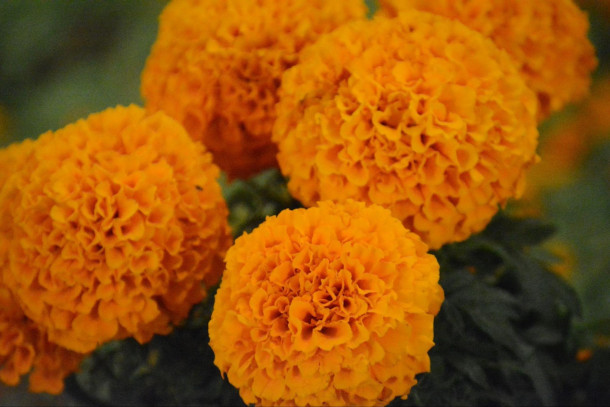
Cempasuchil flowers or petals are usually placed at the bottom of the structures.
The colorful orange and yellow petals, as well as the fragrant scent, once again are meant to attract the departed to the altar.
This year’s altar is especially significant for me and my partner since my father passed away recently.
On my father’s side my family has been farming for generations.
To honor my father’s connection to the earth and agriculture, we’re incorporating alfalfa, cotton flowers and a bit of dirt from the fields he worked with and loved dearly.
It’s honestly been an opportunity to call up family and friends, cry and laugh as we shared anecdotes about all our loved ones who have passed.
Like remembering how my grandfather loved garlic and would even eat it raw, we used to joke around and call him a “vampire slayer”.
Or learning that my father had a perm in college during the 70s, who would’ve thought!!
For us it’s been a healing experience.
Dia de los Muertos is an invitation to cherish the joys of those who have passed away and what they loved about this earth.
It’s also an opportunity to host them once again in your home with intention and care.
And by keeping them close in our memories, we ensure that they are never abandoned or forgotten.
DOERING: That’s Living on Earth’s Paloma Beltran.