Coastal Damage Cases Move to Federal Court
Air Date: May 08, 2026
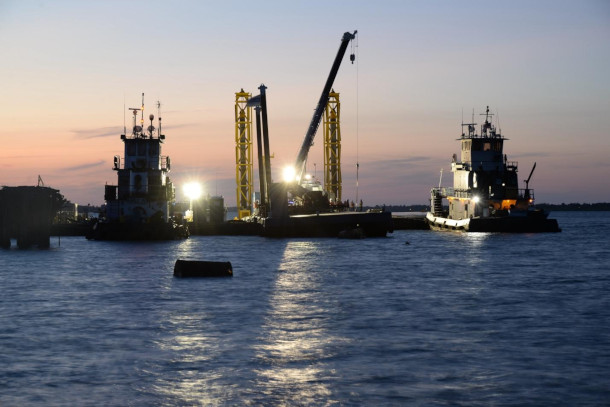
In 2025, a Louisiana jury awarded Plaquemines Parish $745 million to repair environmental damages and land loss caused by oil giant Chevron and its subsidiary Texaco over many decades. But in April the US Supreme Court ruled 8 to 0 that the claims belong in federal court. In his majority opinion Justice Clarence Thomas found that Chevron’s work producing aviation fuel for the United States military during World War II made them federal agents beyond the reach of state courts. Blaine LeCesne, a distinguished professor and an associate dean at the Loyola University New Orleans College of Law, explained the case with Living on Earth’s Paloma Beltran.

- 1Coastal Damage Cases Move to Federal Court
Transcript
DOERING: It’s Living on Earth, I’m Jenni Doering.
O’NEILL: And I’m Aynsley O’Neill.
In 2025, a Louisiana jury awarded Plaquemines Parish 745 million dollars to repair environmental damages and land loss caused by oil giant Chevron and its subsidiary Texaco over many decades. But in April the US Supreme Court ruled 8 to 0 that the case belongs in federal court. In his majority opinion Justice Clarence Thomas chose a broad interpretation of the federal statute in question. He found that Chevron’s work producing aviation fuel for the United States military during World War II made them federal agents beyond the reach of state courts. Based on the rules of procedure, the court did not and could not rule on the merits of the coastal damage claims. But in concurring with the process decision, Justice Ketanji Brown Jackson wrote that Justice Thomas’s opinion improperly opened the door to far less clear-cut cases. Blaine LeCesne, a distinguished professor and an associate dean at the Loyola University New Orleans College of Law, spoke with Living on Earth’s Paloma Beltran.
BELTRAN: What kind of damage did Plaquemines Parish claim from oil extraction?
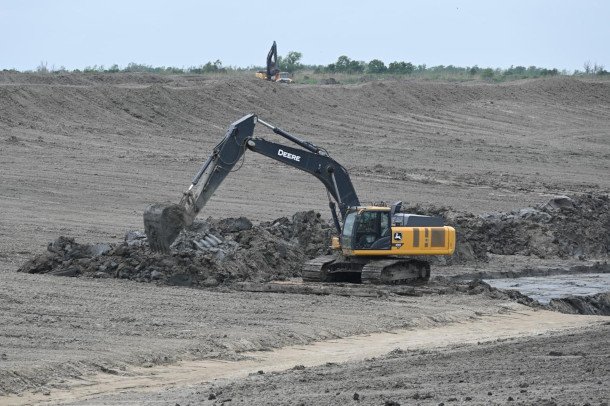
LECESNE: They're claiming, and with substantial science to back those claims up, that the oil and gas infrastructure used by these major oil companies drilling since World War Two and up through the 1970s and particularly the use of canals that were dredged to facilitate oil production activities resulted in 30 to 59 percent of Louisiana's total land loss. That's a massive amount of land. And so Louisiana's coastline, in essence, has lost over 2,000 square miles of land since the 1930s, much of it attributable to the practices of the oil industry in extracting oil and producing oil in Southeast Louisiana.
BELTRAN: So in this case, were there any issues before World War Two that were not federally connected? In other words, was Texaco, now Chevron, engaging in detrimental oil production practices not connected to the federal government?
LECESNE: Well, yes, the answer is yes. This is how they produced oil, and so it was cheaper and quicker to use navigation canals, as opposed to building roads and other infrastructure to facilitate the supply vessels and other equipment moving from the Gulf of Mexico onto the land. So the canals were the cheapest and most expedient and easiest way to gain that access, and so they had always used canals. They used canals before World War Two, and they probably continued to use those canals, if not even dredge more canals after World War Two ended. So that was just the modus operandi for these oil companies to produce oil in the most time-efficient and cost-efficient manner possible.
BELTRAN: So this was sent to federal court on an 8 to 0 Supreme Court decision. Why did Justice Thomas interpret the language or relate it to so broadly?
LECESNE: So Justice Thomas, writing for the majority of the court, took a very broad view of what the phrase, “relate to” means. He literally took a dictionary definition, which is the broadest possible definition of “relate to”, because you can very easily make an argument that any particular thing relates to another thing. In this case, you can very easily say that oil production relates to the refinement of aviation fuel, because crude oil was an essential feed stock to refine aviation fuel. So by saying even an indirect connection is enough, it really opens the gates and broadens the interpretation of that phrase, which would allow all of the other defendants to now say that their activities relate to their wartime obligations to produce aviation fuel.
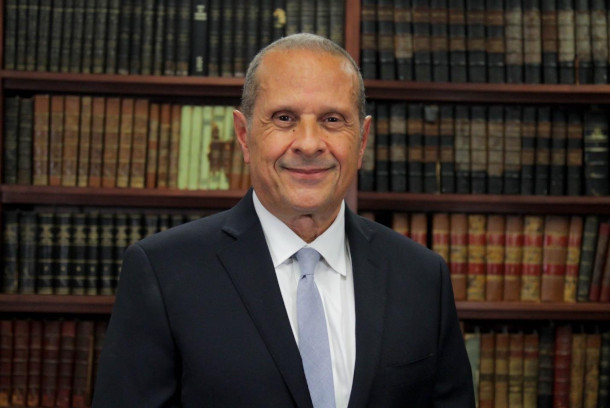
BELTRAN: But liberal Justice Ketanji Brown Jackson wrote a concurring opinion that challenges conservative Justice Clarence Thomas's interpretation. Can you please explain Justice Jackson's concurring opinion? You know, what was her focus, and does it help or hurt the state and local plaintiffs going forward?
LECESNE: Justice Jackson took a far more constrained view of what the term “relate to” actually means, and she said it requires a closer causal connection, or causal nexus, between the duties that you were performing under the contract and the harmful practices that resulted. Unfortunately for the Parish, there's not much that they can do with this opinion, the concurring opinion of Justice Jackson, because the majority opinion stands. And with that majority opinion stands the broad interpretation of “relating to.” So, the damage has been done by the majority, and that cannot be undone until you have a different configuration of the U.S Supreme Court. And that's why this decision is so troubling, because companies now have a roadmap to escape scrutiny in a state court lawsuit, and they can seek a far more favorable environment in the federal court system, and most importantly, they can now have access to the federal contractor immunity defense. So that defense essentially says that anyone acting at the direction of the federal government is in essence a surrogate federal officer, and they are deserving of the same immunity that would be afforded to the federal government. These federal officers would also be entitled to that immunity, even if they lose on the merits. In other words, even if the jury in the federal court proceeding says, yes, we do find that your practices, there was a causal connection between your practices and the damage caused, and we think you should pay for it. None of that is going to matter, because under the federal contractor immunity defense, they are immune and can't be cast in judgment.
BELTRAN: To what extent were the Parish's lawyers thinking about big money here, you know, big money that they would make if the Parish won the case? So that's why it was an overly broad case. Maybe a narrower case might not yield such big numbers and fees. And were the lawyers hired on a contingency basis?
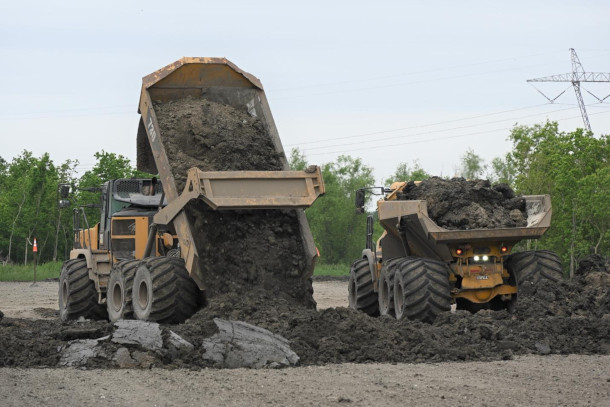
LECESNE: I believe they were. The Parish would not have the resources to fund litigation this complex, and that requires this much time and resources to successfully litigate. This has been going on for 13 years, so you can imagine what a billable hour system would look like. It would be unattainable for the Parish. So the Parish is not overreaching here. I mean the allegations that they're making and the damages that they're seeking align with the damage caused by the activity that the Parish is alleging caused that damage. So the fact that there are huge numbers here is not a function of them being unreasonable in what they're asking. And in fact, the jury looked at the damages in that one case and calculated it to be approximately $744 million. Now the Parish, again, is in an existential crisis, given that they've lost almost 50 percent of their land as a result of this. So they need the funding desperately to try to restore some of the land that was lost, or at least minimize future land loss as a result of those activities. And so this award, that is now essentially gone, would have been a huge influx of necessary funding for Louisiana's Coastal Master Plan. Louisiana has in place a long-term plan to restore its coast as best you can, but that requires billions and billions and billions of dollars that the state doesn't have. It has some of those funds, some of which were actually generated by the BP oil spill. They have some funding, but there's still a several billion dollar shortfall. So this would have gone a long way to shortening or decreasing that gap in funding that Louisiana needs for its coastal master plan. That master plan is, frankly, essential for much of the state to be habitable in the future. Without some effort to restore the coastline, the Gulf will continue to encroach upon Louisiana's dwindling landmass, and much of Southeast Louisiana will no longer be habitable.
O’NEILL: Blaine LeCesne is Associate Dean and distinguished professor at the Loyola University New Orleans College of Law and spoke with Living on Earth’s Paloma Beltran. As we go to broadcast, Plaquemines and other parishes in Louisiana have begun the process of re-filing their complaints against oil companies in federal court.
Related Links
- Louisiana Illuminator | “Supreme Court Rules Plaquemines Coastal Lawsuit Against Chevron Belongs in Federal Court”
- Read the published opinion at the U.S. Supreme Court website
- SCOTUS Blog | “Court Unanimously Sides With Oil and Gas Companies in Suit Over Damage to Louisiana Coast”
- Bloomberg Law News | “Chevron Prevails in US Supreme Court Wetlands Venue Fight”