
Living on Earth: May 19th, 2017
Air Date: May 19, 2017

Nitrogen dioxide is known to harm health, especially lungs and heart, and now a new study finds that it can take a heavy toll on life satisfaction, too. Even if NO2 pollution is below the EU legal limit, sharp increases may lower life satisfaction as much as the death of a spouse. UK’s York University researcher Sarah Knight tells host Steve Curwood that parts of the UK far exceed the EU legal pollution limit, and what city-dwellers can do to protect themselves from this danger.
Air Pollution Chokes Out Happiness
8 min read · 10 min listen

Nitrogen dioxide is known to harm health, especially lungs and heart, and now a new study finds that it can take a heavy toll on life satisfaction, too. Even if NO2 pollution is below the EU legal limit, sharp increases may lower life satisfaction as much as the death of a spouse. UK’s York University researcher Sarah Knight tells host Steve Curwood that parts of the UK far exceed the EU legal pollution limit, and what city-dwellers can do to protect themselves from this danger.
Air Pollution Transformed into Renewable Energy
7 min read · 9 min listen
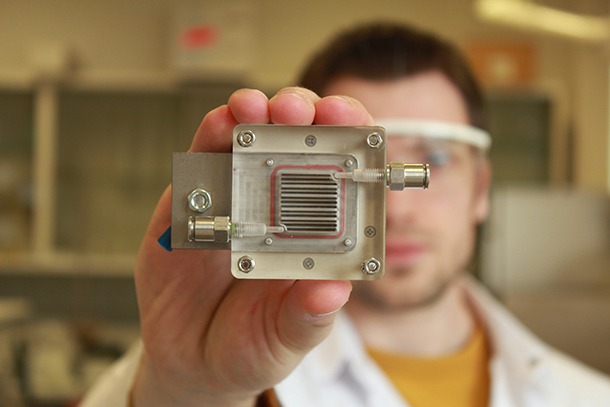
The WHO reported in 2014 that over 90% of the world’s population live with polluted air. But now Belgian researchers using solar-powered nanomaterials have decontaminated small amounts of polluted air with a process that generates hydrogen at the same time. University of Antwerp researcher, Sammy Verbruggen, joins Steve Curwood to explain how their tiny photo-electrochemical prototype device shows promise, but to make an impact it needs to be scaled up.
Astrophysics for People in a Hurry
22 min read · 29 min listen
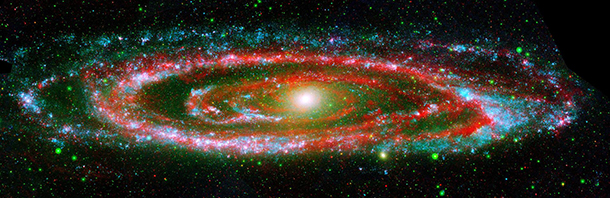
Neil Degrasse Tyson directs New York’s Hayden Planetarium, but he’s also a Pop-Science rock star. Now he’s penned a slim volume titled Astrophysics For People In A Hurry, aiming to make his discipline accessible to non-scientists. He joined Living on Earth Host Steve Curwood for a flash-course on all things celestial, with topics ranging from spagettification by black hole, dark matter and energy, to how the periodic table encompasses, so far as we know, everything in the universe.
BirdNote: American Robins are Exceptional Singers
2 min read · 3 min listen

The American Robin is often the first bird to sing in the morning, and the last bird to trill into the evening air. BirdNote’s Michael Stein describes how robins’s wide repertoire of caroling phrases and notes creates a unique serenade every time.
Science Note: The Power of Dust
2 min read · 3 min listen
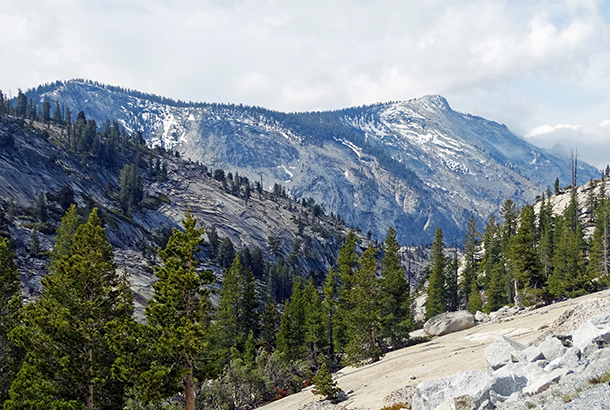
In the Sierra Nevada mountains, heavy runoff and erosion can steal precious soil nutrients from the ecosystem. New research shows replacements come from an unlikely source: dust flying in from far away, as Noble Ingram explains on this week’s Note on Emerging Science.
Solar Eclipsing Coal in Jobs
5 min read · 7 min listen

Coal still produces much more energy in the U.S. than solar, which powers less than one and a half percent of the grid. Yet there are now twice as many solar jobs as those in coal. As the Allegheny Front’s Reid Frazier reports, some former coal miners are becoming solar technicians, though it may involve a pay cut.
Sounds of Space: The Songs Of Uranus And Neptune
1 min read · 1 min listen
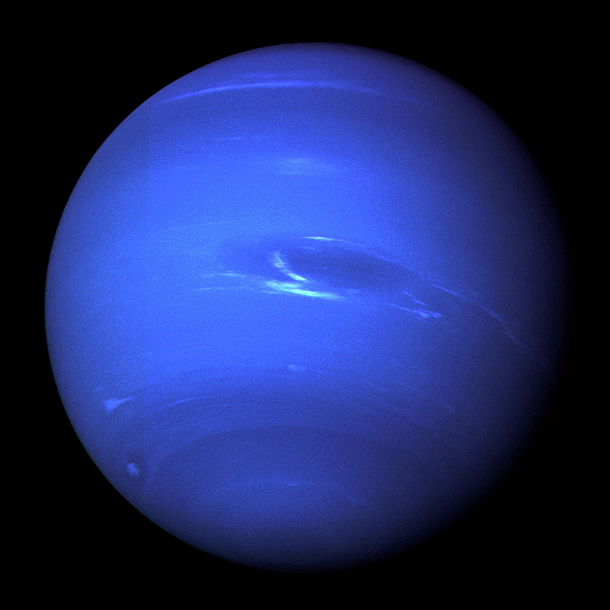
As they passed through the outer reaches of our solar system on the way to interstellar space, NASA’s twin Voyager spacecraft sent back data that include electromagnetic vibrations from Uranus and Neptune and other outer planets. NASA transformed that data into sounds we humans can hear, on its Symphonies of the Planets CD.