
Living on Earth: January 26th, 2018
Air Date: January 26, 2018
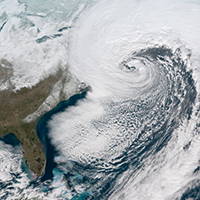
2017 brought devastating storms and wildfires to the U.S., costing lives and a record $306 billion. Penn State University climate expert Michael Mann tells host Steve Curwood that global warming is making powerful storms and drought driven wildfires more likely. But Professor Mann says this is not a “new normal,” because the planet has not reached a new climate stability. Instead humanity is now facing an ever-increasing threat of unpredictable and extreme weather.
Atomic Bomb Waste Could Leak into the Sea
15 min read · 19 min listen

The U.S. military conducted nuclear weapons tests in the Marshall Islands in the 1940s and 50s, leaving a legacy of radioactive waste could be washed into rising seas. Australian Broadcasting Corporation reporter Mark Willacy tells host Steve Curwood that sea water is infiltrating the Runit Dome, an atomic bomb waste repository on a remote Marshall Island atoll. This poses a potential risk of radiation exposure for the small local population, though US experts insist its plutonium contamination levels aren’t dangerous.
Credit-Worthiness in a Changing Climate
8 min read · 10 min listen
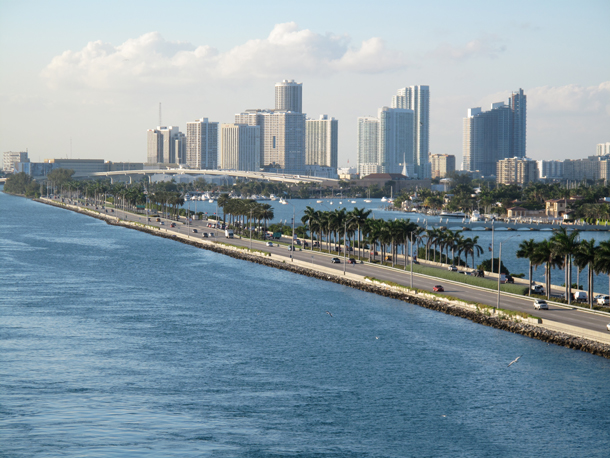
The credit rating agency Moody’s Investor Services issued a company memo that outlines its plans to quantify the increasing risks posed by climate change. They’re part of a growing segment within the business world that wants to address global warming disruption in a more substantive way. Host Steve Curwood spoke with Andrew Teras, an analyst at Breckinridge Capital Advisors who rates communities’ credit worthiness, to find out how cities can address global warming and avoid a downgrade.
Extreme Weather an Extreme Risk
2 min read · 2 min listen
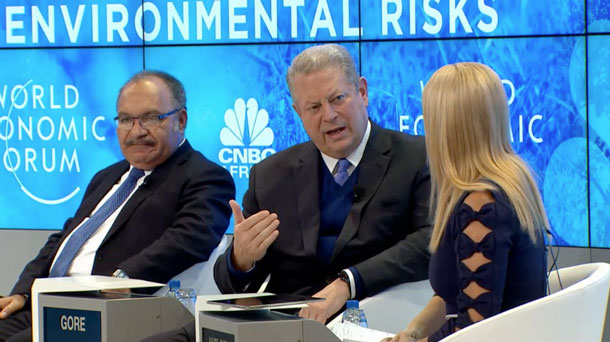
The Global Economic Forum at Davos unveiled its list of major risks facing humanity in 2018. Since extreme weather events are seen as the most likely global risks, former US Vice President Al Gore and Papua New Guinea Prime Minister Peter O’Neill urged world leaders to act to curb greenhouse gas emissions.
Extreme Weather Likely to Increase
12 min read · 15 min listen
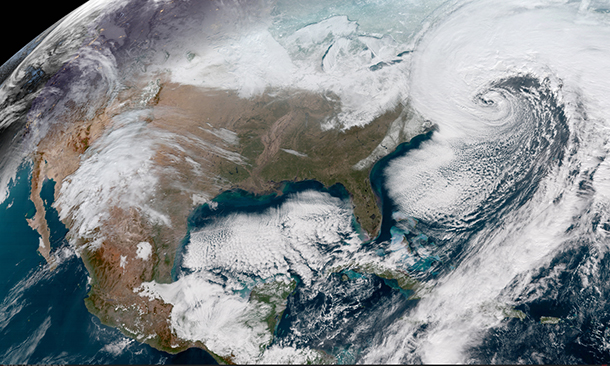
2017 brought devastating storms and wildfires to the U.S., costing lives and a record $306 billion. Penn State University climate expert Michael Mann tells host Steve Curwood that global warming is making powerful storms and drought driven wildfires more likely. But Professor Mann says this is not a “new normal,” because the planet has not reached a new climate stability. Instead humanity is now facing an ever-increasing threat of unpredictable and extreme weather.
Pelicans at Pismo Beach
2 min read · 3 min listen
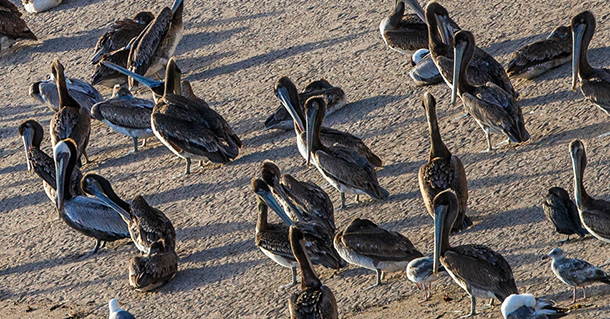
Living on Earth’s Resident Explorer Mark Seth Lender watches the Brown Pelicans that gather at Pismo Beach in California to fish and preen, and finds them oddly graceful.
Poetic Plea for the Marshall Islands
6 min read · 8 min listen
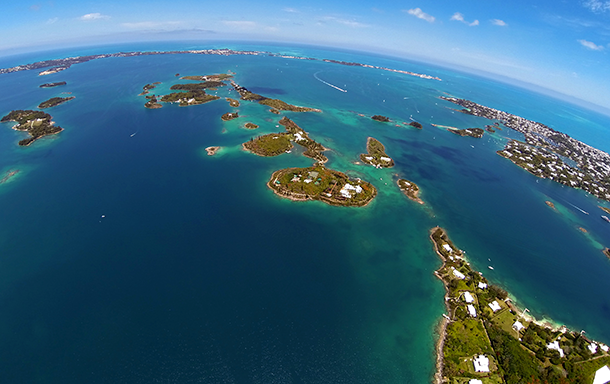
The Marshall Islands’ thousands of residents are extremely vulnerable to climate change. Poet Kathy Jetnil-Kijiner describes life on the island and the threat from rising seas, and performs her poem “Tell Them.”