Hope From Baby Right Whales
Air Date: February 03, 2023
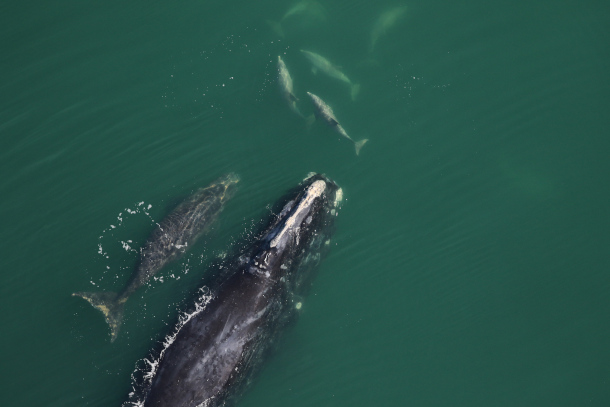
North Atlantic Right Whales are critically endangered with fewer than 350 individuals left, but the births of several baby whales this season are bringing a glimmer of hope for the species. Living on Earth's Sophia Pandelidis reports that so far this season scientists have observed at least 11 living North Atlantic right whale calves in the warm coastal waters of the southern US.

- 1Hope From Baby Right Whales
Transcript
CURWOOD: From PRX and the Jennifer and Ted Stanley studios at the University of Massachusetts Boston, this is Living on Earth. I'm Steve Curwood.
And I'm Bobby Bascomb.
North Atlantic Right Whales are critically endangered with less than 350 individuals remaining. Right whale populations have been in trouble since the 1800s when they were targeted for hunting. They floated to the surface when killed making them easy to recover and giving them their name as they were the "right" whale to hunt.
CURWOOD: Whale hunting was banned in the US in 1971, though there is an exception for registered native Alaskans to hunt bowhead whales. But even with a hunting ban north Atlantic right whales are still vulnerable to ship strikes and entanglement in fishing gear used for lobstering as they live mostly near the surface close to the shore along the East Coast. US government efforts to protect the whales by restricting boating speeds and fishing areas have failed to halt their decline and calls for stricter protections are controversial.
BASCOMB: And right now is a critical time for the whales. November to April is calving season for them. Baby whales are crucial to the survival of the species and are being born in the warm coastal waters of the Southern US. So far this season scientists have observed at least 11 living North Atlantic right whale calves. Living on Earth's Sophia Pandelidis has more.
PANDELIDIS: The eleven babies were spotted off the coast of Florida and Georgia, where the animals migrate to breed. They migrate the entire length of the East Coast from Canada. In early January, another calf was found dead in North Carolina. Scientists are still trying to determine the cause, but as far as we know, eleven remain alive and well. These newborns will stay with their mothers for about a year, and for many scientists, it's a joy to watch these mama whales bring life into the world. Many of them have names and are well known to researchers.
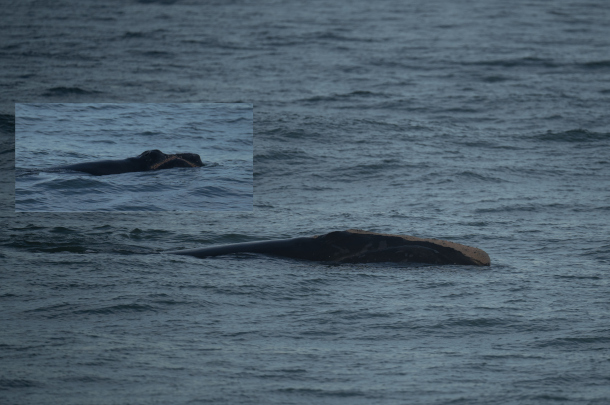
DURETTE-MORIN: I try not to play favorites too much. But I am particularly excited about Pilgrim. It's her first time being a mom. So that's really cool. She's 10 years old.
PANDELIDIS: Delphine Durette-Morin is an Assistant Scientist at the Canadian Whale Institute, and she says that while Pilgrim may be fresh on the parenting scene, other females are veteran moms.
DURETTE-MORIN: Spindle is more than 41 years old. And this is actually her 10th calf, which is pretty amazing.
PANDELIDIS: Although eleven living calves so far is better than the zero calves born in 2018, it's still about half the average observed in recent years. More calves could be born in the second half of the season, but Delphine says the final count is unlikely to keep pace with death and injury. And some scientists argue that a small number of calves could actually recover the population if we just stopped hurting and killing them. The whales are often wounded by rope entanglements and ship strikes, injuries that can drastically reduce a female's ability to carry a calf to term.
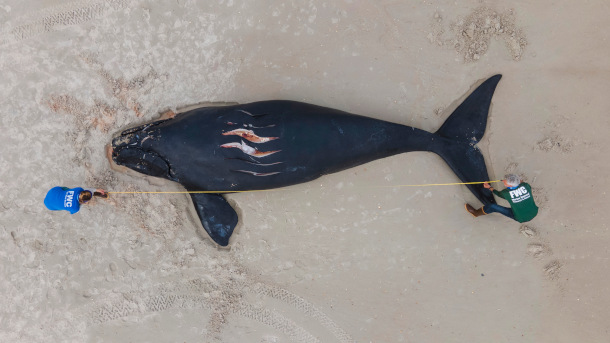
DURETTE-MORIN: There's only so much energy that an adult female has to allocate to reproduction. And so, if she's allocating that energy to other things like staying alive, let's say she has an entanglement. That's going to take up a lot of her energy and she won't have any left for reproduction.
PANDELIDIS: And sometimes, entanglements and ship strikes are fatal. In 2021, a calf hit by a sportfishing boat washed up on the Florida shore. His mother, Infinity, was never seen again. Scientists like Delphine hope that regulating ship speeds, altering shipping routes, and investing in whale friendly fishing gear will prevent these kinds of deaths. The question is, will we move quickly enough to give them a chance? For Living on Earth, I'm Sophia Pandelidis.
Related Links
- New England Aquarium | "2022-2023 North Atlantic Right Whale Mother and Calf Pairs"
- Canadian Whale Institute
- NOAA Fisheries | "2017-2023 North Atlantic Right Whale Unusual Mortality Event"
- Regulations.gov | "Proposed Rule: North Atlantic Right Whale Vessel Strike Reduction Rule"
- Conservation Law Foundation | "Emergency Petition to Take Action to Protect Critically Endangered North Atlantic Right Whales from Vessel Strikes in the 2022-2023 Calving Season"