Living on Earth: July 5th, 2024
Air Date: July 05, 2024
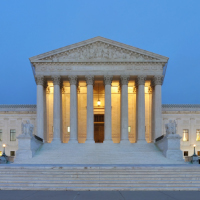
In a 6-3 decision the US Supreme Court struck down the longstanding Chevron deference doctrine, which allowed federal agencies to make rules relying on unclear statutes, provided their interpretation was reasonable. Law professor and former EPA Regional Counsel Pat Parenteau joins Host Aynsley O’Neill to parse the potentially disastrous consequences of this decision for environmental and other public protection regulations and what agencies and lawyers will need to do to have a fighting chance in court.
- 1A Vivid New View of Earth
- 2From the History Books
- 3SCOTUS Restricts Rulemaking
- 4Starborn: How the Stars Made Us
A Vivid New View of Earth
9 min read · 11 min listen
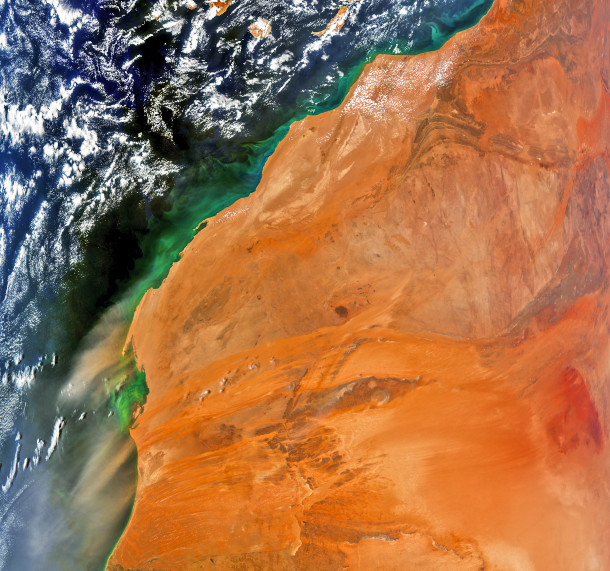
A powerful new NASA satellite called PACE can look at the ocean and clouds to distinguish between different kinds of microscopic phytoplankton and aerosols from an orbit 400 miles up. PACE Project Scientist Dr. Jeremy Werdell joins Host Jenni Doering to describe how the technology works, its value to scientific research on climate change, and the real-time data it provides about water and air quality worldwide.
From the History Books
3 min read · 4 min listen
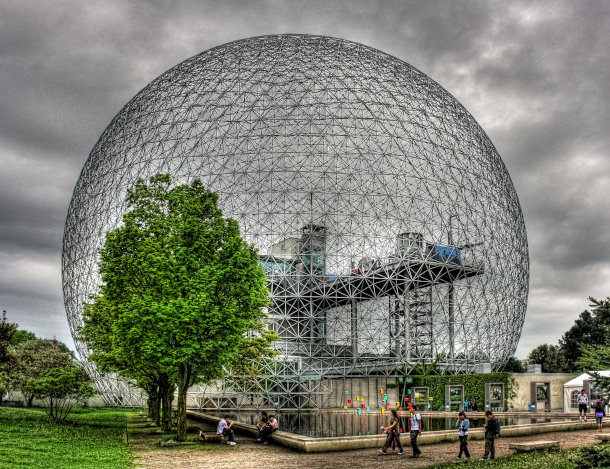
This week, Living on Earth Contributor Peter Dykstra and Host Aynsley O’Neill celebrate the birthday of Buckminster Fuller, inventor of the geodesic dome and other engineering marvels aimed at improving energy efficiency. They also look back to President Nixon’s proposal to create two new federal agencies consolidating US work on environmental regulation as well as on oceans, atmosphere, and weather, giving rise to the EPA and NOAA.
SCOTUS Restricts Rulemaking
12 min read · 15 min listen
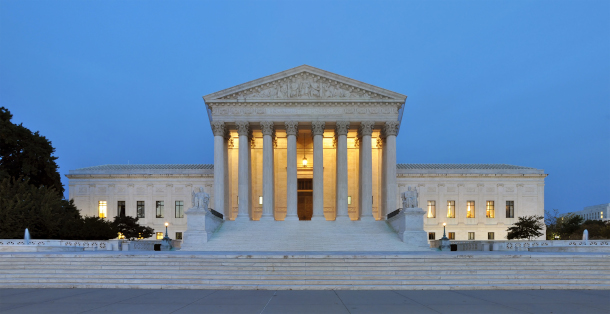
In a 6-3 decision the US Supreme Court struck down the longstanding Chevron deference doctrine, which allowed federal agencies to make rules relying on unclear statutes, provided their interpretation was reasonable. Law professor and former EPA Regional Counsel Pat Parenteau joins Host Aynsley O’Neill to parse the potentially disastrous consequences of this decision for environmental and other public protection regulations and what agencies and lawyers will need to do to have a fighting chance in court.
Starborn: How the Stars Made Us
16 min read · 21 min listen
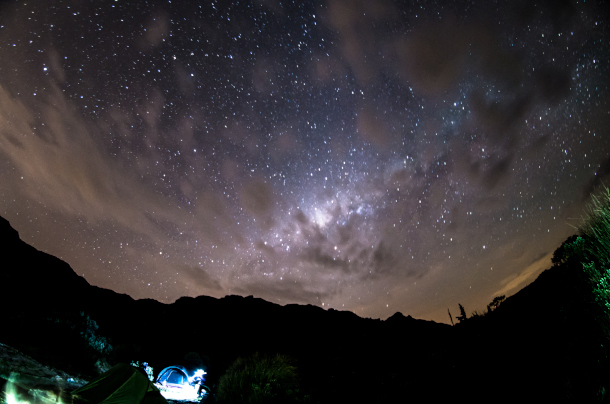
Stargazing has profoundly shaped who we are as human beings, and gave rise to science, religion, and origin stories from diverse traditions. Roberto Trotta, a cosmologist at the International School for Advanced Studies in Trieste, Italy, explores this legacy in his book Starborn: How the Stars Made Us (And Who We Would Be Without Them). He joins Host Jenni Doering to discuss how studying the night sky shaped science and more and why satellites now threaten our connection to the stars.