Tree Swallow Funnel
Air Date: September 27, 2024
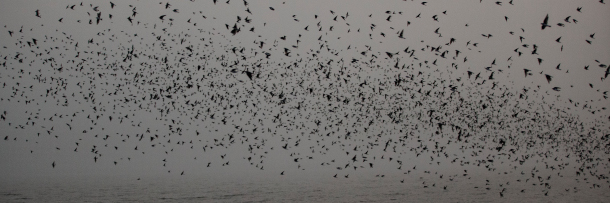
One of the smallest and most agile migrating birds is the tree swallow. Living on Earth’s Explorer in Residence Mark Seth Lender marvels at how these little fliers gather in huge airborne displays as they prepare for the fall migration.

- 1Tree Swallow Funnel
Transcript
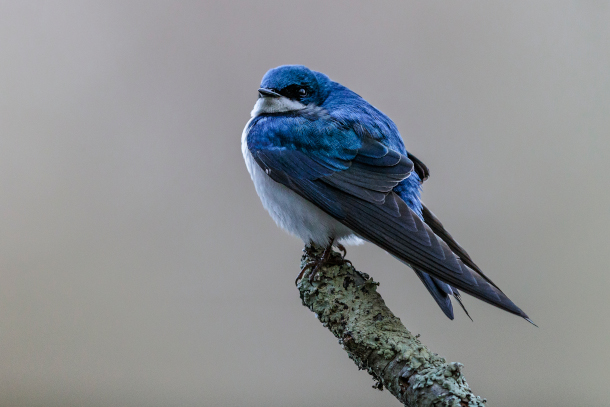
O’NEILL: Here in the Northern Hemisphere, it’s fall migration time, when millions of birds of all sizes travel thousands of miles to warmer lands farther south. One of the smallest and most agile is the tree swallow. Living on Earth’s Explorer in Residence Mark Seth Lender marvels at how these little fliers gather in huge airborne displays.
Tree Swallow Funnel
© 2023 Mark Seth Lender
All Rights Reserved
LENDER: Near the mouth of the Connecticut when the tree swallows are getting ready to go, they make these… Paintings on the sky. Hundreds of thousands, moving together. The shapes change like magic. What looks like mouse becomes fish turns into rabbit and then, a giant lobster complete with claws. Like clouds. But fast. Blink and what you saw is something else. As migration nears, at the morning flyout that’s what they do.
The sun comes up.
They melt away.
Clusters of three and five and maybe a dozen, off to feed on insects that they grasp out of thin air. The eye can barely keep up with them they are so agile, such acrobats in flight.
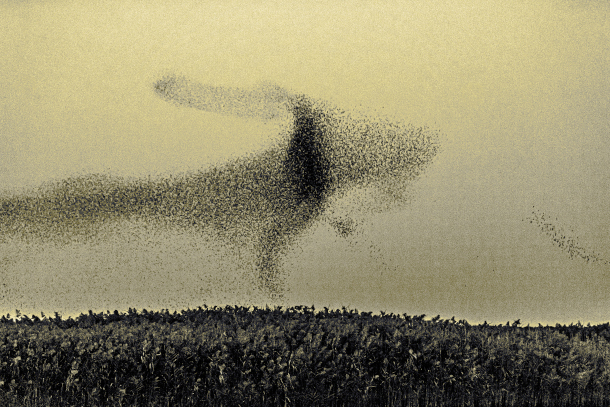
At dusk they return.
You would think, so much energy spent, they should be ready for bed; not so. They land but then they rise up. The last colors of sunset behind them, like shadow puppets.
Dark descends.
Tree swallows come careening down. Sometimes they form a funnel shape, like a tornado, that same swirling. They come in so fast you can hear them hit the reeds - you barely see them, for the darkness and the speed. And they bed down there for sleep.
This pre-migratory behavior is called a murmuration. Other birds do this. But tree swallows, uncountable, all of them airborne at one time, and the incredible shapes they make, they are unique. Just like us there’s only so close they want to come to each other. They too have what we call Personal Space. This and the span of their wings, creates an inner limit. Which keeps them apart. What keeps them, together – if you look closely, you can see it – hawks and falcons herding the periphery, waiting on those that separate from the murmuration. Safety for tree swallows is in numbers, and coordination. They’re safe as long as they move as one.
O’NEILL: That’s Living on Earth’s Explorer in Residence, Mark Seth Lender.