The Bog in Winter
Air Date: February 21, 2025
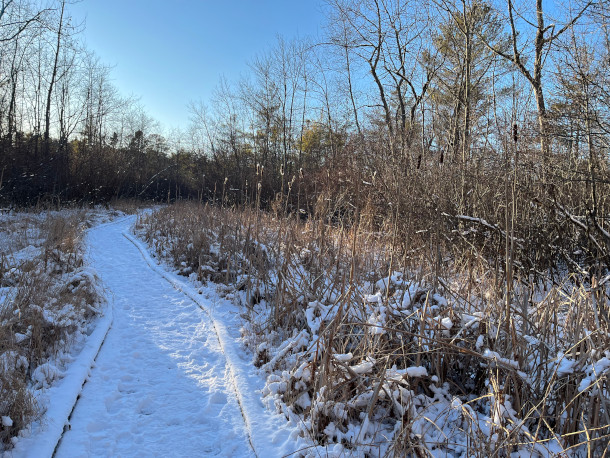
Just under the ice at Pine Hole Bog north of Boston, diverse forms of life from dragonfly nymphs to turtles and frogs await the spring thaw. Living on Earth’s Don Lyman shares a reflection from a winter walk through this beloved place.

- 1The Bog in Winter
Transcript
CURWOOD: The days may be getting longer but winter still has its grip firmly on us here in the Northern Hemisphere. Living on Earth’s Don Lyman shares this reflection from a winter walk through a beloved bog.
LYMAN: It’s a bitterly cold December day — 19 degrees, with a wind chill in the single digits. The woods of the Charles W. Ward Reservation north of Boston are blanketed with a few inches of snow from a recent storm.
I follow a short icy trail from the parking lot through the woods to the Pine Hole Bog boardwalk. The lush green growth of summer is gone. The sedges, rushes, and grasses that grow straight and tall near the bog’s entrance, when I bring my Merrimack College biology students here in September, are bent and brown. A dozen or so snowcapped cattails stand beside the boardwalk like silent sentinels.
The cranberries and tiny carnivorous sundew plants that line the edges of the boardwalk just past the cattails are hidden beneath the snow. Here and there, an occasional tuft of emerald sphagnum moss pokes through. Most of the bog’s many shrubs -- swamp azalea, highbush blueberry, and pepperbush -- are bare. The only shrub that defies the winter is sheep laurel. Its three-leaved whorls are still dark green, but they droop in the bitter cold.
The numerous puddles around the boardwalk are frozen solid. I stand on one to test the ice. Not even the slightest sound of cracking. The pond at the end of the boardwalk is frozen too. The dragonflies that zip above the pond in summer and autumn are nowhere to be seen. Their nymphs are likely crawling along the bottom, waiting to metamorphose and take flight when the weather warms and the pond thaws. The turtles and frogs my students delight in seeing on our late summer excursions are somewhere under the ice as well, their metabolism slowed to a trickle, just enough to keep them alive until the spring thaw reinvigorates them.
The late afternoon light is fading rapidly on this day after the winter solstice, the shortest day of the year. My toes and fingertips are numb, and my nose is running from the cold as I turn and head back toward my car.
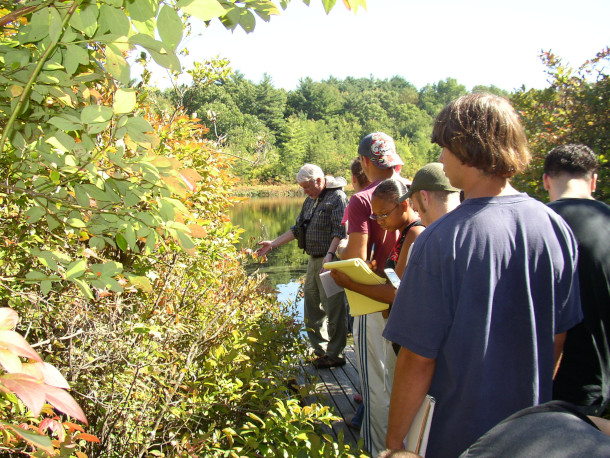
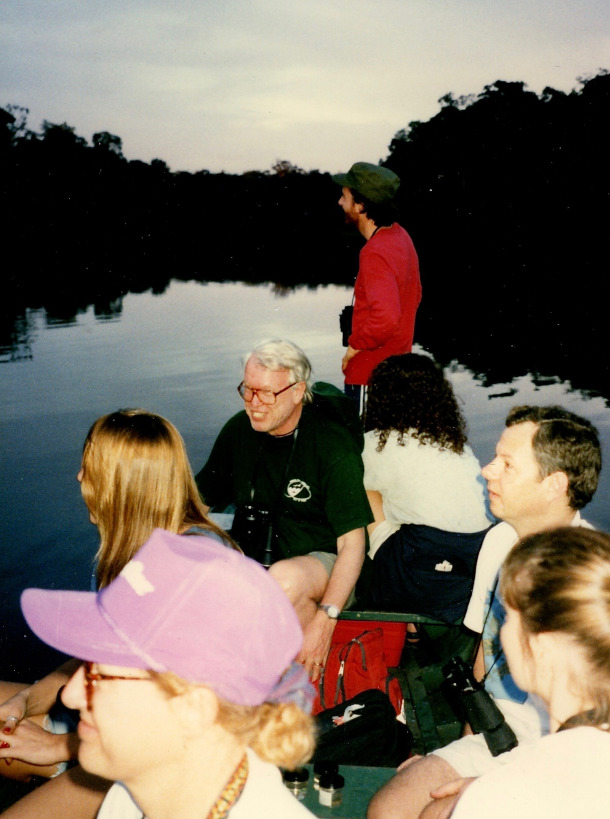
I pause briefly before I leave the bog and think of my friend, colleague, and mentor, Larry Kelts, who invited me to join the biology faculty at Merrimack almost three decades ago. He loved this place, and taught me much about the bog, and the plants and animals that inhabit it. Larry was a popular biology professor who took several generations of students on field excursions to this bog as well as to far flung places including Africa, the Brazilian Amazon, and Australia. Someone once said that a teacher affects eternity because he or she never knows where their influence stops. Larry passed away recently, but his lessons and love of biology and nature endure in all those whose lives he touched.
I’ll be back next September, God willing, along with my students, when the sun is warm, and the bog is filled with life once again. And I’ll remember who taught me about this beautiful place, and so much more, and gave me the opportunity to follow in his footsteps, and perhaps to leave a few footsteps of my own.
CURWOOD: That’s Living on Earth’s Don Lyman.
