Deb Haaland on Our Public Lands
Air Date: March 28, 2025
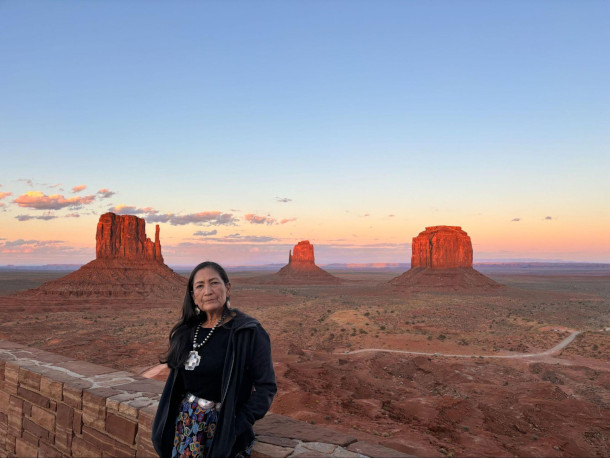
Deb Haaland became the first Native American cabinet member when President Biden appointed her as Secretary of the Interior and helped consult with tribes to designate new national monuments. Now she’s running for Governor of New Mexico, and Deb Haaland joins Host Jenni Doering to discuss the current threats to public lands and her deep ancestral connections to the New Mexican landscape.
- 1Deb Haaland on Our Public Lands
Transcript
DOERING: The US Department of the Interior manages vast public lands and natural resources as well as relations with Native American tribal nations. But major changes are underway as the Trump administration seeks to slash government spending and exploit public lands for energy resources. For instance, Presidential adviser Elon Musk and DOGE, or the Department of Government Efficiency, have terminated thousands of jobs at Interior, though court orders have reinstated some of those employees. And Secretary of the Interior Doug Burgum recently said he intends to “support President Trump’s vision of American Energy Dominance” by opening up more of Alaska to oil and gas development. Secretary Burgum’s predecessor Deb Haaland is observing these administrative earthquakes with growing alarm. As the first Native American to serve as Secretary of the Interior under President Biden, she pushed forward several national monument designations and started an initiative to investigate abuse in the so-called Indian boarding schools of the 19th and 20th centuries. Before her time in the Biden Administration, Deb Haaland represented New Mexico’s 1st congressional district as a Democrat. Now she’s running for Governor of New Mexico and joins me now to discuss the future of public lands in America. Welcome back to Living on Earth, Madam Secretary!
HAALAND: Thanks so much. I'm happy to be here.
DOERING: So Madam Secretary, you've just concluded your time as US Secretary of the Interior, and you were the first Native American woman to hold that position. In the past couple of months, quite a lot has happened in that department. How are you reacting to the change in leadership and policy?
HAALAND: Yeah, you know, it's tough to read about, quite frankly. A lot of folks have lost their jobs. I don't think they are honing in on what folks actually do in their jobs and why their jobs are important. And then I question, who's around to do the work? Who's around to manage our national parks? Who's around to empty the trash cans and make sure that trails are safe and ensure that, the scientists are tracking the wildlife and testing the waters and doing all the things that we know are so important to our public lands? So yes, it's a concern, and I think a lot of Americans will find out that it should be a concern, because we're coming up on a really heavy visitation season during the summer, a lot of families go to our national parks, our wildlife refuges, they go to our public lands to recreate, and I think that they're going to find that there's a shortfall of folks to do the work to make those places safe for them and their families.
DOERING: While serving as Secretary of the Interior under President Biden you helped restore environmental protections for national monuments like Bears Ears and Grand Staircase Escalante in Utah, which had been vastly reduced in size under the first Trump administration. And, you know, now we're seeing further threats to national parks, monuments and public lands under the second Trump administration.
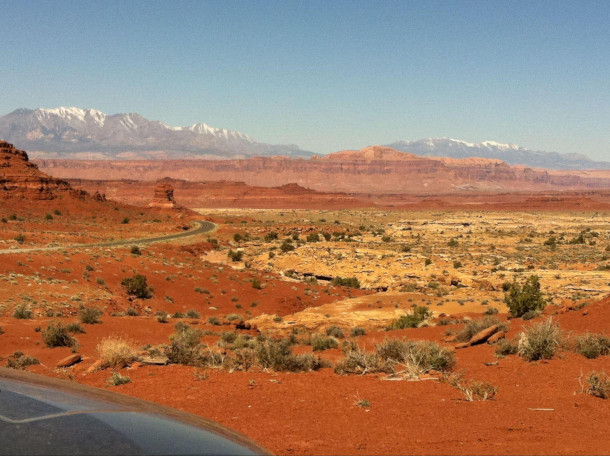
HAALAND: Look, our public lands belong to every American, and I think as soon as any public lands are threatened, that every American should stand up for them, right? And I had so many opportunities to be on our public lands when I was growing up, and I want that for every child. These lands belong to us, it's our cultural heritage. And quite frankly, the Department of the Interior has an obligation to protect our cultural heritage for every American. So I'll do whatever I can do to stand up for our public lands. They give us this amazing outdoor economy that so many people rely on to keep a roof over their family's head, so it's smart to make sure that our public lands are there, because folks make a living by being on our public lands. And of course, our children deserve to have these public lands far into the future.
DOERING: You know, we've been reporting here on the show about a couple of national monuments that I think you were involved in helping designate just before the end of President Biden's term, in California. This is Chuckwalla National Monument and Sáttítla Highlands National Monument. And you know, from our understanding, it looks like the Trump administration is really looking at scaling those back. So what's your understanding of what they're trying to do, and what are your concerns in terms of the Trump administration trying to roll back these designations?
HAALAND: Well, I hope that the tribes, some of these were tribally led conservation efforts. The Indian tribes in California had fought for these areas for a very long time, and I hope that the tribes are rising up and making the way they feel about this known to this administration. I mean, look, when I was in the department, community led conservation, tribally led conservation, these were efforts that had been in the works for decades, right? So it wasn't just a overnight type of decision. These were decisions that took a long time to make, that involved so many people who live in the areas – elected officials, tribal members, folks who came together because they care about our public lands. And so, I can only hope that if this administration is talking about rescinding some of these, that they are actually going back to the communities and getting that buy in, right? If it took 20 years to get something done, it should take 20 years to undo it.
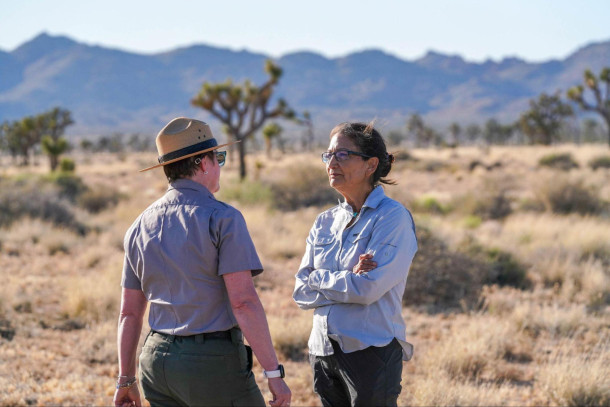
DOERING: Now, the current administration is terminating environmental justice and Diversity Equity and Inclusion or DEI efforts. As a minority group that has historically been denied civil rights and faced economic and health disparities, what's your perception of how Native American communities may be impacted by this shift?
HAALAND: So I find it interesting that they would lump Native Americans in with DEI considering that the federal government has an obligation to Indian Tribes. We have government-to-government relationships, and the federal government has trust and treaty obligations to Native Americans. It isn't DEI. And I hope that this administration will perhaps read up on some history and understand that they have to live up to these trust and treaty obligations, because, yes, Indian tribes, at one time, this was all of our land. There was not one place in North America that didn't belong to indigenous people, and so in exchange for all of the land that became the United States, the United States Government made certain promises to Indian tribes. Tribes need to have a seat at the table, and they have to have a say in the decisions that are made about them, and so I am hopeful that these voices will permeate the federal government, and that the federal government, at this point, will know and understand what their obligation is to tribes.
DOERING: Now, you're running for Governor of New Mexico, where your family has been for, I believe it's 35 generations, and I know that you're a proud member of the Laguna Pueblo tribe. To what extent has that identity uniquely prepared you to serve the people of New Mexico?
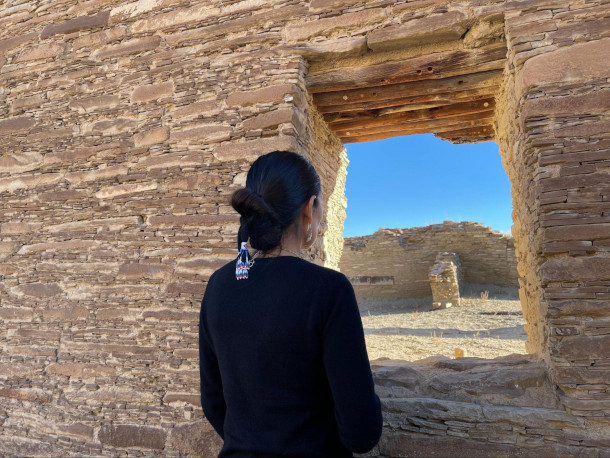
HAALAND: Well, I always say I'm a Pueblo woman first. That's definitely my identity. I am who my mom and my dad, and my grandparents raised me to be. And so, I've had a number of opportunities for young folks to be in my office, whether it was in my congressional office or, when I was Secretary, in that office. And I often tell them I never realized that spending time with my grandfather in his corn field would inform a job that I have in public service, but it did. The times that I would spend in my grandfather's field picking worms off of ears of corn, or helping him irrigate, or hoe weeds, those were all experiences that endeared me to our natural resources and to our beautiful landscapes and to the outdoors. Likewise, my dad taking us on hikes, taking us fishing, renting a rowboat so that we can row up and down a swamp for a couple of days. These were all things that helped me to embrace the jobs that I've had in public service, so I'm very grateful for that, and I think we can all dig deep and ask ourselves, you know, why we do what we do. It's because we care deeply, because we were taught to care by the people who loved us as we were being raised.
DOERING: Mmm, yeah, going back one generation, and also many more, it sounds like.
HAALAND: Yes.
DOERING: And talk to me about some of the lands in New Mexico that are particularly significant to your tribe, the Laguna Pueblo. What do those areas mean to your people and to you personally?
HAALAND: You know, we have six villages at Laguna. We're agriculturalists, you know, Pueblo Indians were farming the desert long before they migrated to the Rio Grande Valley. And so there are areas on our pueblos that are earmarked specifically for agriculture, and those places are very special. I mean, those fields have fed our people for generations and generations, and I know that there are some organizations that are really working hard to engage youth in those activities. It's a tradition that I hope will continue long into the future. We should be farming our own food, and we should be thinking about how our traditions and our culture make our lives richer and actually feed us. So I would say that, in short, our agricultural fields are essentially sacred to us. And of course, we just have amazing landscapes in Laguna. My grandmother is from the village of Mesita, and there's a big red mesa that looms over the village. And when I was a kid, my cousins and I, we used to hike to the top of that often. And the landscapes are with me always.
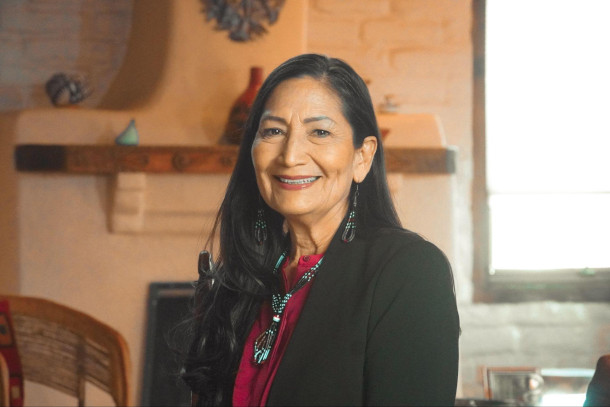
DOERING: As we speak, we're just wrapping up Women's History Month, but I think we can all agree that women's history doesn't suddenly become irrelevant once March has passed. So talk to me about your journey as a woman, a Native American woman, to where you are today. What's kept you going?
HAALAND: As I mentioned, I am who I am because of the people who raised me. And my grandmother, she was the matriarch of our family. We're a matrilineal society, so the women are all very important in Pueblo society. And I was raised by a woman who would get up at sunrise every morning and clean her entire house, and tend to things. My grandmother worked hard every single day, likewise my mother did, and so, I feel so grateful that I had those role models. And so when I set out to run a campaign, to get elected, to be a Congresswoman for a district in my state, I do that with the way I was raised in mind. That means I'm going to work extremely hard, that the people are relying on me, and I have an obligation to them as a public servant to work as hard as I can and make sure that people have a voice, right? When you're a public servant, you should hear from the people who you're serving, and you should be attentive to their needs. So I hope that I can continue to be that kind of public servant. I care deeply about my state, and as a 35th generation New Mexican, of course, I'll do whatever I can to lift up New Mexicans across the state.
DOERING: Deb Haaland is former US Secretary of the Interior and is currently running for Governor of New Mexico. Thank you so much, Secretary.
HAALAND: Thank you very much.
Related Links
- Deb Haaland for New Mexico Campaign Website
- US Department of the Interior | “Interior Secretary Takes Steps to Unleash Alaska’s Extraordinary Resource Potential”
- Living on Earth |"National Monuments Restored"
- National Parks Conservation Association | “President Biden Establishes Chuckwalla National Monument, Expanding the Largest Protected Landscape in the Lower 48 States”
- The White House | “Proclamation on the Establishment of the Sáttítla Highlands National Monument”
- Living on Earth | “Meet Deb Haaland, Native American Congresswoman”
- Living on Earth | “Deb Haaland: ‘Fierce for Our Planet’”
- Living on Earth | “Madam Secretary Haaland”