Saving a Sacred Mountain in Mongolia
Air Date: June 13, 2025
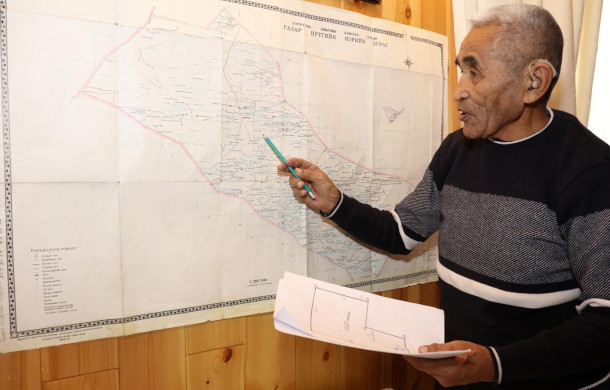
Batmunkh Luvsandash, winner of the 2025 Goldman Environmental Prize for Asia, was raised as a Mongolian herder and later became an engineer who worked on mining projects in the mineral-rich country. But when he learned that the Mongolian government was planning to mine the sacred Hutag mountain, which is also home to the endangered Asiatic ass, he sprang into action. Batmunkh joined Living on Earth’s Paloma Beltran (speaking through a translator) to share why protecting the area is so important to him.
- 1Saving a Sacred Mountain in Mongolia
Transcript
DOERING: The vast deserts, mountains and steppes of Mongolia are home to nomadic herders who cherish the land as sacred. But the land is also coveted for its deposits of gold, copper, zinc, uranium, and coal, that is sometimes mined illegally and with huge consequences for groundwater, grazing land and wildlife habitat. Batmunkh Luvsandash, winner of the 2025 Goldman Environmental Prize for Asia, was raised as a herder and later became an engineer who worked on mining projects. But when he learned that the Mongolian government was targeting the sacred Hutag mountain for mining, he sprang into action. Batmunkh spent months surveying the area, using his engineering skills to draw detailed maps of where most of the wildlife live. He then used these maps to collaborate with Mongolian officials to protect hundreds of thousands of acres of land, including 66,000 acres at the base of Hutag mountain. Batmunkh Luvsandash spoke through an interpreter with Living on Earth’s Paloma Beltran.
BELTRAN: I understand that the Hutag Mountain is culturally sacred. What does this region mean for you and your community?
LUVSANDASH (SPEAKING THROUGH TRANSLATOR): So we Mongolian people are a nomadic people that treat their land as sacred ground, because we believe that these mountains are sacred because they came under the water from long time ago, prehistoric times, and they are special because they came out from the ground, just like the Mount Everest used to be underwater pre historically, that mountain is very special and dear to us. It's in our heart. It's important to me, culturally and also historically, for Mongolian people to, to believe in the land, to cherish their natural habitat. And there's a lot of findings, historical and archeological findings are surrounding the mountain. There's cave drawings also discovered. And all in all, we value those things that are invaluable, and we like to keep that and culturally preserve them for the future generations.
BELTRAN: And Mongolia is home to several important species, including the endangered Asiatic wild ass and Argali sheep. How does mining impact these animals?
LUVSANDASH (SPEAKING THROUGH TRANSLATOR): Where I'm from, which is Dornogovi province. It's a region where there's not a lot of water. It's desert-like region of Mongolia, and because of having so many mining operations, especially the illegal ones, having no natural restoration policies and activities, they drive away these endangered species that are called Asiatic ass. We call it [inaudible]. And also they use lot of water used for their mining process, so it really just leaves competition for the natural habitats to be able to survive, and it's creating a lot of issues for the natural habitats and also for the farmers to be able to continue their farming operations. And a lot of these illegal minings contribute to consequences to the natural environments, and that's why these Asiatic ass, the Argali sheep is being endangered due to these mining operations and their uses of the land.
BELTRAN: And I understand that you worked as an engineer on mining and construction projects before embarking on this project to protect the Hutag Mountain from mining. What inspired you to use your knowledge for environmental protection?
LUVSANDASH (SPEAKING THROUGH TRANSLATOR): So people in Mongolia, when they reach 60 years old, they get retired, as is the case for me and I, for some reason, I was determined to protect my natural land where I was born, and I haven't stopped since then.
BELTRAN: And how does your family and your grandchildren feel about your work and activism?
BELTRAN: All of my grandchildren, I make sure that they believe in the mountain, in the work that I do, so they support me well, and in return, I help them to keep the tradition.
BELTRAN: He's a cool grandpa.
LUVSANDASH (SPEAKING THROUGH TRANSLATOR): Thank you so much.
BELTRAN: So what would you like to tell the world about what's happening in your homeland?
LUVSANDASH (SPEAKING THROUGH TRANSLATOR): I would like to tell the world that, sure, there are countries that are underdeveloped, but they have natural resources, ability to mine for economic gain, and I understand the need for the mining, but I also have to let people know and remind them that there's the right way, there's the honest way to do certain things, especially when it comes to mining, because mining can leave so much environmental effect and wastes and hazards. And I just want the world and the people to know that there's a way that we can keep our environment and nature safe. And safe place for the generations to come and for them to live healthy. And to me, it's important to keep that balance.
BELTRAN: A true and amazing message.
LUVSANDASH (SPEAKING THROUGH TRANSLATOR): Thank you so much.
DOERING: That’s 2025 Goldman Prize Winner for Asia, Batmunkh Luvsandash, speaking through a translator with Living on Earth’s Paloma Beltran.