Science Note: Axolotls Released to Wild
Air Date: October 31, 2025
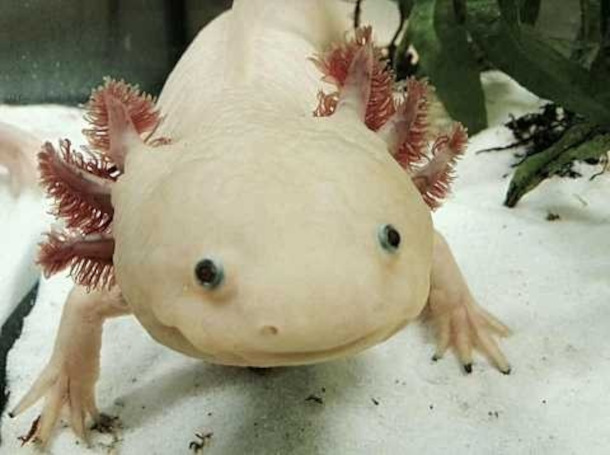
Axolotls, aquatic salamanders with feathery gills that look like they’re always smiling, are endemic to a single lake in Mexico and critically endangered in the wild. Living on Earth’s Don Lyman reports on a successful release of captive-bred axolotls into wetlands that provides hope for boosting this unique creature’s wild population.

- 1Science Note: Axolotls Released to Wild
Transcript
DOERING: We head to Mexico now, where in some homes altars are brimming with gifts for departed loved ones. But first this note on emerging science about an amphibian endemic to Mexico, with a bit of a cult following.
SCIENCE NOTE THEME
LYMAN: Axolotls, aquatic salamanders with feathery gills that look like they’re always smiling. These amphibians are endemic to just one lake in Mexico. There are lots of axolotls in captivity, as pets or research animals, but there are estimated to be only 50 to 1,000 of the endangered salamanders left in the wild. But conservation biologists recently reported that releasing axolotls that were bred in captivity into restored and manmade wetlands, may help to bolster their populations.
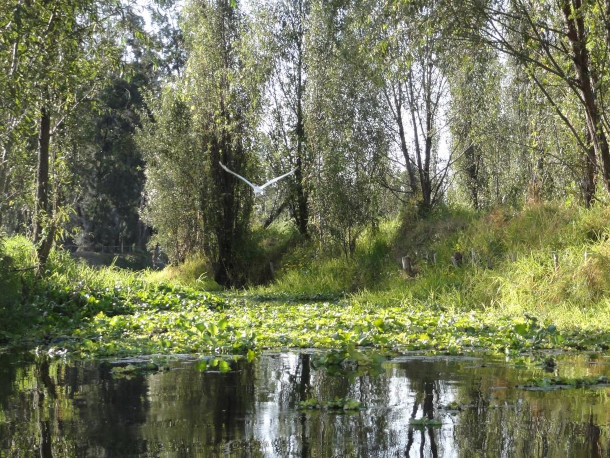
A team led by Alejandra Ramos, a scientist at the Universidad Autonoma de Baja California in Ensenada, Mexico, released 18 captive-bred axolotls with implanted radio transmitters into two wetlands in Mexico City. One group was released into a restored canal in the axolotl’s native habitat — Lake Xochimilco, and the other into a pond in an artificial wetland. Researchers then tracked the aquatic salamanders for 40 days.
The scientists reported that all of the axolotls in the study survived, and three gained weight, indicating that they were successfully hunting prey in their new home. The data also showed that the amphibians traveled farther early in the experiment, perhaps exploring before they found hunting and hiding spots.
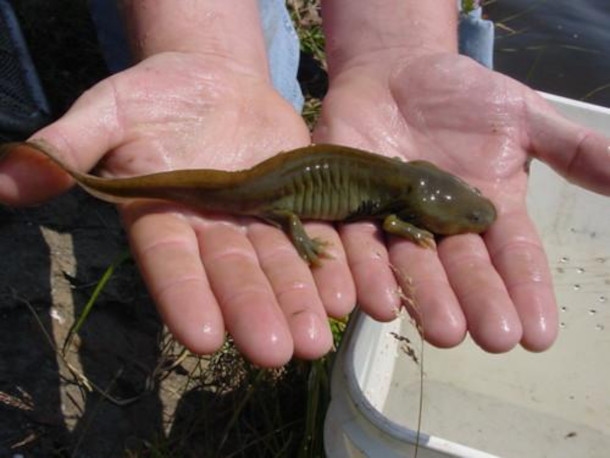
Reintroduction is really a plan B, said Luis Zambrano, an ecologist at the Universidad Nacional Autónoma de México in Mexico City. The researchers' main goal, Zambrano said, is to improve the aquatic habitat for axolotls already living in the wild.
That’s this week’s note on emerging science. I’m Don Lyman.