Punxsutawney Phil and Earlier Springtimes
Air Date: January 30, 2026
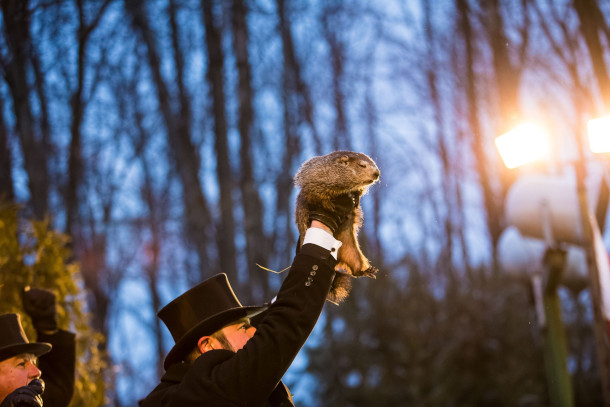
While Punxsutawney Phil of Groundhog Day correctly predicts when spring will come only around 40% of the time, he has been predicting earlier springs more often in recent decades, trending with the reality of climate change.

- 1Punxsutawney Phil and Earlier Springtimes
Transcript
DOERING: Well, now let’s go from Reporter Phil to Punxsutawney Phil, the famous groundhog of Gobbler’s Knob, Pennsylvania with a weather forecast. On February 2nd or Groundhog Day, Punxsutawney Phil emerges from hibernation to either a cloudy day where he doesn’t see his shadow and “predicts” an early spring, or a confrontation with his own shadow that sends him back into his burrow to wait out 6 more weeks of winter. Though it can be exceptionally fun to watch a cute rodent open his eyes for the first time in months, when it comes to accurate predictions for an early spring, Groundhog Day may be an antiquated holiday and hilariously repetitive Bill Murray movie at best. In fact, data from the National Oceanic and Atmospheric Administration shows that Punxsutawney Phil is only accurate about 40% of the time, worse than a coin toss. But the non-profit organization Climate Central finds that in the last 50 years, Punxsutawney Phil has been predicting earlier springs much more often. That's a total of 14 times compared to just 5 times in the nearly 75 years before. And that does trend with reality. A 2020 analysis of hundreds of US cities showed that 93% experienced an early spring in the 6 weeks following the groundhog’s prediction. And that’s not good news for the natural world. Early spring can mean the springtime green-up of buds and bugs happens before migratory birds return to their nesting grounds, so food starts to run short in the breeding season. And early rising temperatures can prompt emerging groundhogs to jump the gun on the mating season, so their little ones might not find enough to eat when they’re weaned. And while an extended growing season might sound like good news for farmers, crops that sprout early in our volatile climate are at higher risk of being killed off by late-season frost. No matter what the groundhog is predicting this year, you can find more data-driven forecasts for when spring should arrive in your city thanks to the National Phenology Network, and we’ll link to that on the Living on Earth website, loe.org. So hopefully you can plan your gardening endeavors and outdoor adventures with a bit more success than Punxsutawney Phil, without a shadow of a doubt!