Note on Emerging Science: Detecting Antibiotics in Wastewater
Air Date: February 27, 2026
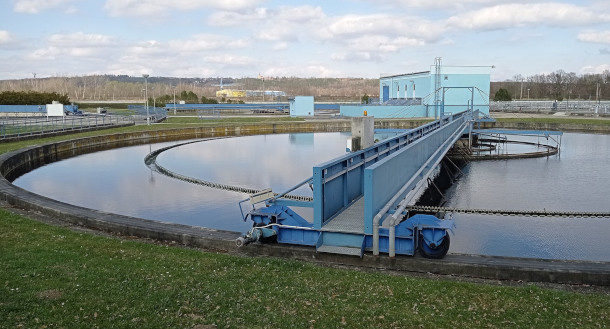
Wastewater treatment often fails to capture antibiotics, which can lead to antibiotic resistance and even “super microbes” when they end up in our waterways. Living on Earth’s Hedy Yang reports in this Note on Emerging Science that scientists in Brazil have found a novel way to improve antibiotic detection in wastewater, by using sewage sludge itself to create a coating for sensors.

- 1Note on Emerging Science: Detecting Antibiotics in Wastewater
Transcript
BELTRAN: After the break, mining wastewater for nutrients but first this note on emerging science from Hedy Yang.
SCIENCE NOTE THEME
YANG: For a lot of the developed world, the motto around waste is: out of sight, out of mind. Like when it comes to wastewater, we flush the toilet or pour something down the sink, and it gets carried away into a sewage system that we never see the inner workings of. Most of us trust these systems to take care of things, and our wastewater treatment systems are pretty good at filtering out most of the harmful stuff. But one thing that they often fail to capture is pharmaceuticals — and in particular, antibiotics that end up in our waterways from improper medication disposal and human excrement. Antibiotic contamination can lead to antibiotic resistance and even create “super microbes” that impact entire aquatic ecosystems. But now, scientists have found a novel way to detect antibiotics in our wastewater — in a very full circle way.

Researchers in Brazil used none other than sewage sludge to create a coating for sensors that can improve antibiotic detection in wastewater. They first turned the sewage sludge into biochar, a carbon-rich form of charcoal. The biochar was then processed and applied as a coating to carbon electrodes to create a simple sensor. That sensor was able to accurately detect an antibiotic called trimethoprim, or TMP, commonly prescribed for UTIs and other infections. Researchers are hopeful that this process can someday be used to detect not only TMP, but other toxins and micropollutants as well. This gives a whole new meaning to the saying “one man’s trash is another man’s treasure.” Only in this case, one person’s waste might be a whole community’s key to a healthier future. That’s this week’s Note on Emerging Science. I’m Hedy Yang.