staging build cb69f69
This Week on Living on Earth

- 1Living on Earth: July 3, 2026
July 3rd: As we mark America’s 250th birthday, we celebrate parts of America’s enduring ecology, including our national parks. At the heart of one of Washington State’s most expansive wild ecosystems is North Cascades National Park, just a three-hour drive from Seattle yet one of the lesser-known parks. Saul Weisberg, founder and executive director of the North Cascades Institute and super docent of the North Cascades, joins Host Steve Curwood to talk about his years exploring the park.
This week in Living on Earth history
-
Freshwater Under the Sea
June 28, 2019
Most of the world’s aquifers, like the Ogallala of the Central Plains, are under dry land but researchers recently discovered an enormous source of fresh water under the Atlantic Ocean. Living on Earth’s Joseph Winters explains.
-
Red Sky at Morning
July 2, 2004
James Gustave Speth has worn many hats throughout his environmental career. Twenty-five years ago, he advised President Jimmy Carter on how to globally deal with emerging environmental problems like climate change and deforestation. Since then, he’s founded the World Resources Institute and the Natural Resources Defense Council. He talks with host Steve Curwood about his observations over this key period in environmental progress, and about his new book, “Red Sky at Morning: America and the Crisis of the Global Environment.”
-
Almanac/In the Fast Lane
June 28, 2002
This week, we have facts about speed limits. On July 5, 1865 England passed the first speed limit law, a measly 2 mph in the city.
-
Gold Rush Legacy, Part I
July 2, 1999
This year marks the 150th anniversary of the discovery of gold in California's Sierra Nevada mountains. Cheryl Colopy of member station KQED in San Francisco reports on the legacy of the Gold Rush on a landscape that was virtually untouched before gold was discovered.
Recent Shows
June 26th, 2026
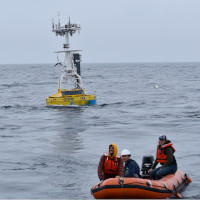
After announcing at the end of May it was dismantling the Ocean Observatories Initiative, the National Science Foundation faced widespread public criticism and the Senate passed a bipartisan measure to preserve the vital ocean monitoring network. NSF then reversed its decision and says an array that was already being removed will be redeployed. Living on Earth’s Aynsley O’Neill joins Hosts Steve Curwood and Jenni Doering to discuss this reprieve for climate and ocean science.
June 19th, 2026
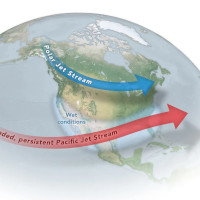
The 2026 El Niño is now officially underway, according to the National Oceanic and Atmospheric Administration or NOAA. Combined with the ongoing rising temperatures from the climate crisis, this possible “super” El Niño could spell major disruption of weather patterns and ocean circulation worldwide. Kevin Trenberth, scientist at the University of Auckland in New Zealand as well as a Distinguished Scholar at the National Center for Atmospheric Research in Boulder, Colorado, joins Host Jenni Doering to explain.
June 12th, 2026

George Washington Carver was born into slavery but went on to become a famous agronomist and helped poor people in the South improve their lives and soils by planting peanuts and other legumes. This week, he comes back from the past in the form of actor and playwright Paxton Williams. As “George Washington Carver” Williams talks to Host Steve Curwood about the future of modern-day agriculture and intersections between racial dynamics and agricultural development.
June 5th, 2026
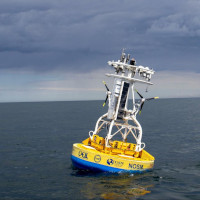
The National Science Foundation has announced it will begin removing most of the Ocean Observatories Initiative, a collection of roughly 900 instruments in the Pacific and Atlantic Oceans that gathers fixed-point data on temperature, carbon dioxide levels, and more. Craig McLean, formerly the assistant administrator for research and acting chief scientist at NOAA, joins Host Jenni Doering to discuss the importance of this monitoring system to understanding climate risks, vital ocean currents and more.
May 29th, 2026
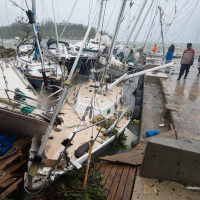
More than two-thirds of U.N. members recently voted in favor of a resolution affirming a landmark ruling by the International Court of Justice that countries have a legal obligation to limit global warming. While this advisory opinion is not enforceable, it will likely be cited in lawsuits and appeals as a fact in the fight against climate disruption. Inside Climate News reporter Bob Berwyn speaks with host Jenni Doering about the significance of the ruling and its U.N. adoption.