This Week on Living on Earth
May 22nd, 2026
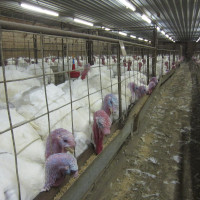
Living near many large Concentrated Animal Feeding Operations or CAFOs appears to raise cancer risk, according to a study from Yale researchers. CAFOs pack thousands of pigs, cows, and chickens together to produce meat, dairy, and eggs. All those crowded animals can produce a lot of waste that pollutes air and water, which may explain an association between CAFOs and cancer, though the study does not prove causation. Brian Bienkowski, managing editor of The New Lede, joins Host Steve Curwood to talk about the research and how concerns transcend politics.
This week in Living on Earth history
-
Congestion Fee for NYC
May 17, 2019
New York City just became the first in the nation to adopt a congestion pricing plan. It’s expected to raise about a billion and a half dollars in revenue every year mostly for its crumbling subway system and cut down on some of Manhattan’s infamous traffic south of Central Park. Drivers who pay a $12 or so fee should also benefit from less congestion. Transport economist Charles Komanoff speaks with Host Steve Curwood about why he believes congestion pricing will make getting around New York City more efficient, reliable, and humane.
-
Controversial Dam in Ethiopia
May 17, 2013
The Gibe dam in Ethiopia, under construction since 2006, could become the 4th biggest dam in the world. But Philemon Loyeli, a local activist tells host Steve Curwood that the free-flowing river is vital to local people's livelihood and Elizabeth Hunter, from human rights group Survival International, explains that the project would disrupt the annual flooding of the Omo River, and the government is ignoring their plight.
-
Loss Lingers In New Orleans
May 18, 2007
The psychological cost of losing one’s neighbors and the connections that comprise a home, is one native New Orleanean Rodney Dejoie has had to pay. Living on Earth’s Ingrid Lobet met with Mr. Dejoie in his Ninth Ward neighborhood and produced this portrait.
-
Eskimos in Russia
May 19, 2000
Alaskan Eskimos are helping the native people in Siberia relearn how to live off the land. Siberian Yupik used to subsist on marine mammal hunting, but during the Soviet era their hunting was restricted, and know-how and traditions were lost. Jody Seitz reports.
Recent Shows
May 15th, 2026
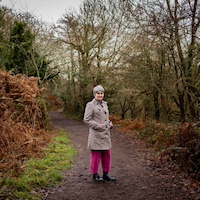
Great Britain is Europe’s third largest oil and gas producer, even with a commitment to a net-zero economy by 2050. A small group of climate activists is helping the UK meet that target by winning a Supreme Court decision that’s blocking any new UK oil and gas projects that don’t assess climate impacts. Sarah Finch of Surrey, near London led the fight against proposed oil and gas drilling in the region known as the Weald, and she’s been recognized with the 2026 Goldman Environmental Prize for Europe. She joins Host Steve Curwood.
May 8th, 2026
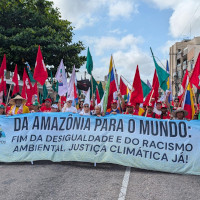
The first gathering of a new international “coalition of the willing” to transition away from fossil fuels recently took place in Colombia. It’s a separate event from the UN COP climate negotiations and was born in part out of frustration over fossil fuel friendly nations like the US, Russia, China, and Saudi Arabia stalling the COP process. Rodrigo Estrada, Senior Climate Advisor at Greenpeace International, was there and joins Host Aynsley O’Neill to share the takeaways and next steps.
May 1st, 2026
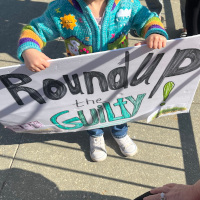
The US Supreme Court recently heard oral arguments for Monsanto v. Durnell, a case about whether states can require warning labels on pesticides if the EPA does not. This stems from thousands of lawsuits against Roundup maker Monsanto, alleging that farmers and landscapers who developed cancer weren’t warned of the risks. Though the World Health organization has classified glyphosate, the key ingredient in Roundup, as “probably carcinogenic”, the EPA has not found glyphosate can cause cancer. Pat Parenteau is an emeritus professor at Vermont Law and Graduate School, discusses with Host Steve Curwood.
April 24th, 2026
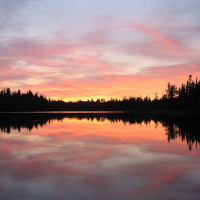
On April 16 the US Senate voted to reverse a moratorium on mining near the Boundary Waters Canoe Area Wilderness in Minnesota, a million acres on the US-Canada border that’s teeming with wildlife and crystal-clear waters. For years a Chilean company has proposed to extract valuable copper, nickel, and cobalt there using copper sulfide mining. Democratic Senator from Minnesota Tina Smith speaks with Host Jenni Doering about why in her view mining in the same watershed as the Boundary Waters is not worth the risk.
April 17th, 2026
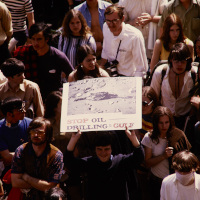
The first Earth Day in 1970, when some 20 million people peacefully demonstrated, arrived amid Vietnam War protests and other social unrest. And it came not long after the Apollo 8 astronauts snapped the iconic “Earthrise” photo that showed all of us were on a single, fragile planet amid the blackness of space. In this moment when humans have finally returned to the Moon after decades, Adam Rome, University at Buffalo environmental historian and author of The Genius of Earth Day, joins Host Steve Curwood to reflect on the movement that led to that first Earth Day and how the world has changed.